

https://youtu.be/MQjQWnWe0BY?list=RDMQjQWnWe0BY
Electric Delta Blues, Detroit Blues,Contemporary blues, Acoustic blues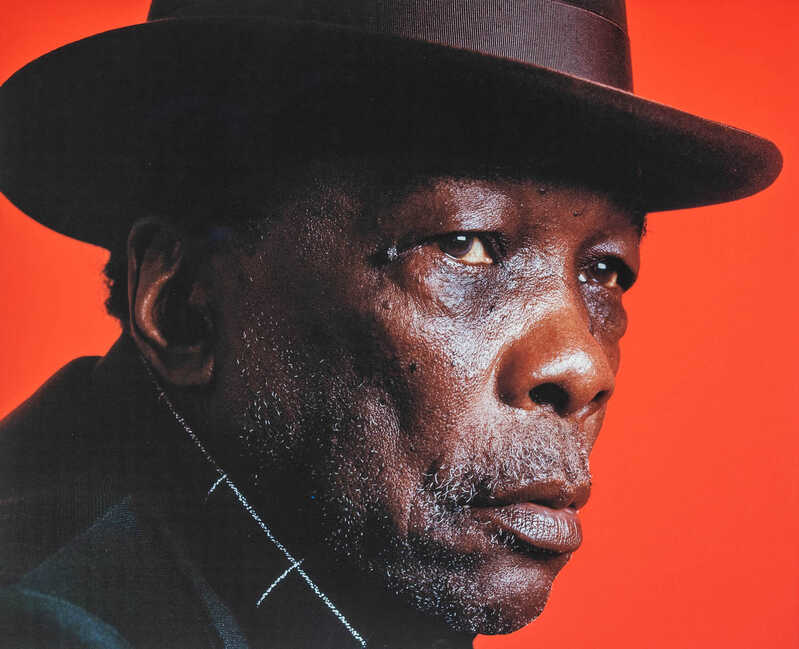
John Lee Hooker collaborated with a diverse array of blues musicians throughout his career, including Eddie Taylor, Blind Owl Wilson, and Elvin Bishop. He also worked with guitarists like Robert Cray, Carlos Santana, and Johnny Winter, as well as other musicians such as Van Morrison, Keith Richards, and Ry Cooder.
Here’s a more detailed look at some of the prominent blues players who collaborated with Hooker:
Eddie Taylor:
. A guitarist who worked with Hooker on numerous early recordings, including “Dimples” and “Boogie Chillun'”.
Blind Owl Wilson:
. Known for his piano, harmonica, and guitar playing, Wilson collaborated with Hooker on the album “Hooker ‘N Heat”.
Elvin Bishop:
. Bishop played with Hooker on various recordings and albums, including “Never Get Out of These Blues Alive”.
Robert Cray:
. A highly respected blues guitarist, Cray contributed to Hooker’s album “Mr. Lucky”.
Carlos Santana:
. Santana played guitar on Hooker’s album “The Healer” and collaborated on other projects.
Johnny Winter:
. Winter, a well-known blues guitarist, played on Hooker’s album “Mr. Lucky”.
Van Morrison:
. Morrison, a singer and songwriter, collaborated with Hooker on multiple albums and duets, including “Don’t Look Back”.
Keith Richards:
. Richards, the legendary Rolling Stones guitarist, played on Hooker’s album “Mr. Lucky”.
Ry Cooder:
. Cooder, a prominent slide guitarist, contributed to Hooker’s album “Mr. Lucky”.
John P. Hammond:
. Hammond, a blues and folk musician, played slide guitar and harmonica on Hooker’s album “Mr. Lucky”.
John Lee Hooker (August 22, 1912[1] or 1917[4][5] – June 21, 2001) was an American blues singer, songwriter, and guitarist. The son of a sharecropper, he rose to prominence performing an electric guitar-style adaptation of Delta blues that he developed in Detroit. Hooker often incorporated other elements, including talking blues and early North Mississippi hill country blues. He developed his own driving-rhythm boogie style, distinct from the 1930s–1940s piano-derived boogie-woogie. Hooker was ranked 35 in Rolling Stone‘s 2015 list of 100 greatest guitarists, [6] and has been cited as one of the greatest male blues vocalists of all time.[7]
https://en.wikipedia.org/wiki/John_Lee_Hooker#
Some of his best known songs include “Boogie Chillen’” (1948), “Crawling King Snake” (1949), “Dimples” (1956), “Boom Boom” (1962), and “One Bourbon, One Scotch, One Beer” (1966). Several of his later albums, including The Healer (1989), Mr. Lucky (1991), Chill Out (1995), and Don’t Look Back (1997), were album chart successes in the U.S. and UK. The Healer (for the song “I’m in the Mood”) and Chill Out (for the album) both earned him Grammy wins,[8][9] as well as Don’t Look Back, which went on to earn him a double-Grammy win for Best Traditional Blues Recording and Best Pop Collaboration with Vocals (with Van Morrison).[10]
Early life
Hooker’s date of birth is a subject of debate; the years 1912, 1915, 1917, 1920, and 1923 have all been suggested. Most official sources list 1917, though at times Hooker stated he was born in 1920. Information found in the 1920 and 1930 censuses indicates that he was actually born in 1912.[1] In 2017, a series of events were held to celebrate the supposed centenary of his birth.[11] In the 1920 federal census, John Hooker is seven years old and one of nine children living with William and Minnie Hooker in Tutwiler, Mississippi.
It is believed that he was born in Tutwiler, in Tallahatchie County, although some sources say his birthplace was near Clarksdale, in Coahoma County.[12] He was the youngest of the 11 children of William Hooker (born 1871, died after 1923),[13] a sharecropper and Baptist preacher, and Minnie Ramsey (born c. 1880, date of death unknown). In the 1920 federal census,[14] William and Minnie were recorded as being 48 and 39 years old, respectively, which implies that Minnie was born about 1880, not 1875. She was said to have been a “decade or so younger” than her husband,[15] which gives additional credibility to this census record as evidence of Hooker’s origins.
The Hooker children were homeschooled. They were permitted to listen only to religious songs; the spirituals sung in church were their earliest exposure to music. In 1921, their parents separated. The next year, their mother married William Moore, a blues singer, who provided John Lee with an introduction to the guitar (and whom he would later credit for his distinctive playing style).[16]
Moore was his first significant blues influence. He was a local blues guitarist who, in Shreveport, Louisiana, learned to play a droning, one-chord blues that was strikingly different from the Delta blues of the time.[12]
Another influence was Tony Hollins, who dated Hooker’s sister Alice, helped teach Hooker to play, and gave him his first guitar. For the rest of his life, Hooker regarded Hollins as a formative influence on his style of playing and his career as a musician. Among the songs that Hollins reputedly taught Hooker were versions of “Crawlin’ King Snake” and “Catfish Blues“.[17]
At the age of 14, Hooker ran away from home, reportedly never seeing his mother or stepfather again.[18] In the mid-1930s, he lived in Memphis, Tennessee, where he performed on Beale Street, at the New Daisy Theatre and occasionally at house parties.[12]
He worked in factories in various cities during World War II, eventually getting a job with the Ford Motor Company in Detroit in 1943. He frequented the blues clubs and bars on Hastings Street, the heart of the black entertainment district, on Detroit’s east side. In a city noted for its pianists, guitar players were scarce. Hooker’s popularity grew quickly as he performed in Detroit clubs, and, seeking an instrument louder than his acoustic guitar, he bought his first electric guitar.[19]
Earlier career
Hooker was working as a janitor in a Detroit steel mill when his recording career began in 1948,[20] when Modern Records, based in Los Angeles, released a demo he had recorded for Bernie Besman in Detroit.[21] The single, “Boogie Chillen’“, became a hit and the best-selling race record of 1949.[20] Though illiterate,[22] Hooker was a prolific lyricist. In addition to adapting traditional blues lyrics, he composed original songs. In the 1950s, like many black musicians, Hooker earned little from record sales, and so he often recorded variations of his songs for different studios for an up-front fee. To evade his recording contract, he used various pseudonyms, including John Lee Booker (for Chess Records and Chance Records in 1951–1952), Johnny Lee (for De Luxe Records in 1953–1954), John Lee, John Lee Cooker,[23] Texas Slim, Delta John, Birmingham Sam and his Magic Guitar, Johnny Williams, and the Boogie Man.[24]
His early solo songs were recorded by Bernie Besman.[25] Hooker rarely played with a standard beat, opting instead to adjust the tempo to fit the needs of the song. This often made it difficult to use backing musicians, who were not accustomed to Hooker’s musical vagaries. As a result, Besman recorded Hooker playing guitar, singing, and stomping on a wooden pallet in time with the music.[26]
For much of this period, he recorded and toured with Eddie Kirkland. In Hooker’s later sessions for Vee-Jay Records in Chicago, studio musicians accompanied him on most of his recordings, including Eddie Taylor, who could handle his musical idiosyncrasies. “Boom Boom” (1962)[27] and “Dimples,” two popular songs by Hooker, were originally released by Vee-Jay.
Later career

Beginning in 1962, Hooker gained greater exposure when he toured Europe in the annual American Folk Blues Festival.[28] His “Dimples” became a successful single on the UK Singles Charts in 1964, eight years after its first US release.[29] Hooker began to perform and record with rock musicians. One of his earliest collaborations was with British blues rock band the Groundhogs.[30] In 1970, he recorded the joint album Hooker ‘n Heat, with the American blues and boogie rock group Canned Heat,[31] whose repertoire included adaptations of Hooker songs.[25] It became the first of Hooker’s albums to reach the Billboard charts, peaking at number 78 on the Billboard 200. Other collaboration albums soon followed, including Endless Boogie (1971) and Never Get Out of These Blues Alive (1972), which included Steve Miller, Elvin Bishop, Van Morrison, and others.
Hooker appeared in the 1980 film The Blues Brothers as a street musician playing “Boom Boom.” In 1989, he recorded the album The Healer with Carlos Santana, Bonnie Raitt, and others. The 1990s saw additional collaboration albums: Mr. Lucky (1991), Chill Out (1995), and Don’t Look Back (1997) with Morrison, Santana, Los Lobos, and additional guest musicians. His re-recording of “Boom Boom” (the title track for his 1992 album) with guitarist Jimmie Vaughan became Hooker’s highest charting single (number 16) in the UK.[29] Come See About Me, a 2004 DVD, includes performances filmed between 1960 and 1994 and interviews with several of the musicians.[32]
Hooker owned five houses in his later life, including ones in the California cities of Los Altos, Redwood City, and Long Beach.[33] On June 21, 2001, Hooker died in his sleep at home in Los Altos.[34][35][36]
Awards and recognition
Among his many awards, Hooker was inducted into the Blues Hall of Fame in 1980,[37] and the Rock and Roll Hall of Fame in 1991. He was a recipient of a 1983 National Heritage Fellowship awarded by the National Endowment for the Arts, which is the United States government’s highest honor in the folk and traditional arts.[38] He was awarded the Grammy Lifetime Achievement Award in 2000[39] and has a star on the Hollywood Walk of Fame. He is also inducted into the Mississippi Musicians Hall of Fame.[40]
Two of his songs, “Boogie Chillen” and “Boom Boom,” are included in the Rock and Roll Hall of Fame‘s list of the 500 Songs That Shaped Rock and Roll.[41] “Boogie Chillen” is also included in the Recording Industry Association of America‘s list of the “Songs of the Century“.[42]
Grammy Awards
- Best Traditional Blues Recording, 1990, for I’m in the Mood, with Bonnie Raitt
- Best Traditional Blues Album, 1995, for Chill Out
- Best Traditional Blues Recording, 1998, for Don’t Look Back
- Best Pop Collaboration with Vocals, 1998, “Don’t Look Back“, with Van Morrison
- Grammy Lifetime Achievement Award, 2000
- National Rhythm & Blues Hall of Fame, 2021–22
Discography
Main article: John Lee Hooker discography
- House of the Blues (1959)
- Hooker ‘n Heat (1971)
- Endless Boogie (1971)
- Never Get Out of These Blues Alive (1972)
- The Healer (1989)
- Mr. Lucky (1991)
- Boom Boom (1992)
- Chill Out (1995)
- Don’t Look Back (1997)
- The Best of Friends (1998)
Film
- The Blues Brothers on Maxwell Street (Chicago) outside Aretha Franklin‘s restaurant (1980)
- John Lee Hooker & Furry Lewis [DVD] (1995)
- John Lee Hooker: That’s My Story [DVD] (2001)
- John Lee Hooker Rare Performances 1960–1984 [DVD] (2002)
- Come See About Me [DVD] (2004)
- John Lee Hooker: Bits and Pieces About … [DVD and CD] (2006)
References
- ^ Jump up to:a b c Eagle & LeBlanc 2013, p. 190.
- ^ “John Lee Hooker biography”. Johnleehooker.com. Archived from the original on May 28, 2011. Retrieved February 19, 2011.
- ^ In the 1920 federal census, series T625, Roll 895, p. 235, in the city of Tutwiler, Tallahatchie County, Mississippi, Supervisor’s District 2, Enumeration District 87, Sheet #29 A, line 25, enumerated February 3, 1920, John Hooker is one of nine children living with William and Minnie Hooker. John is listed as seven years of age at his last birthday. If this is accurate – and if his birthday is August 22, as he claimed – he was born August 22, 1912.
- ^ Jump up to:a b Dahl 1996, p. 115.
- ^ Jump up to:a b “John Lee Hooker Biography”. johnleehooker.com.
- ^ “Rolling Stones 100 greatest guitarists”. Rolling Stone. December 18, 2015.
- ^ “Best blues singers”. Classical-music.com. Retrieved May 2, 2024.
- ^ “32nd Annual GRAMMY Awards”. Grammy.com. January 15, 2013.
- ^ “38th Annual GRAMMY Awards”. Grammy.com. January 15, 2013.
- ^ “40th Annual GRAMMY Awards”. Grammy.com. January 15, 2013.
- ^ Brian McCollum, “John Lee Hooker 100th birthday tribute”, Detroit Free Press, May 1, 2017.
- ^ Jump up to:a b c Palmer 1981, pp. 242–243.
- ^ Murray 2002, p. 24: “In 1928, Will Hooker Sr. and Jr. made a profit of twenty-eight dollars” from farming, making his death in 1923 impossible.
- ^ U.S. Census, Series T625, Roll 895, p. 235, in the city of Tutwiler, Tallahatchie County, Mississippi, Supervisor’s District 2, Enum. District 87, Sheet 29 A, Lines 18–19, enumerated February 3, 1920.
- ^ Murray 2002, p. 23.
- ^ Oliver 1968, p. 76.
- ^ Murray 2002.
- ^ Murray 2002, p. 43.
- ^ Wogan, Terry (1984). Shoes Off the Record. New York City: Da Capo Press. pp. 116–18. ISBN 0-306-80321-6.
- ^ Jump up to:a b Palmer 1981, p. 242.
- ^ Palmer 1981, p. 243.
- ^ “Hooker, John Lee | Detroit Historical Society”. detroithistorical.org. Retrieved October 30, 2020.
- ^ Liner notes. Alternative Boogie: Early Studio Recordings, 1948–1952.
- ^ Leadbitter & Slaven 1987, pp. 579–95.
- ^ Jump up to:a b Palmer 1981, p. 244.
- ^ Murray 2002, p. 121.
- ^ Palmer 1981, p. 245.
- ^ Dahl 1996, p. 116.
- ^ Jump up to:a b “John Lee Hooker: Singles”. Official Charts. Retrieved December 3, 2022.
- ^ Unterberger, Richie. “Groundhogs: Artist Biography”. AllMusic. Retrieved September 12, 2017.
- ^ Russo, Greg (1994). Uncanned! The Best of Canned Heat (CD compilation booklet). Canned Heat. EMI/Liberty. p. 14. 7243 8 29165 2 9.
- ^ Viglione, Joe. “John Lee Hooker: Come and See About Me [DVD] – Review”. AllMusic. September 13, 2017.
- ^ Finz, Stacy (July 28, 1998). “Fire Damages Blues Artist’s Los Altos Home / John Lee Hooker escapes unharmed with his eight guitars”. SFGate. Retrieved February 10, 2019.
- ^ Pareles, Jon (June 22, 2001). “John Lee Hooker, Bluesman, Is Dead at 83”. The New York Times. ISSN 0362-4331. Retrieved February 9, 2019.
- ^ “Bluesman John Lee Hooker, 83”. Washington Post. June 21, 2001.
- ^ “Bluesman John Lee Hooker dies”. Variety. June 21, 2001.
- ^ Blues Foundation (1980). “1980 Hall of Fame Inductees: John Lee Hooker”. Blues Foundation. Archived from the original on December 18, 2015. Retrieved July 13, 2016.
- ^ “NEA National Heritage Fellowships 1983”. http://www.arts.gov. National Endowment for the Arts. Archived from the original on September 20, 2020. Retrieved November 24, 2020.
- ^ “Lifetime Achievement Award”. Grammy.org. 2000. Archived original on July 2, 2015. March 7, 2017.
- ^ “Inductees: Rhythm and Blues (R & B)”. Mississippi Musicians Hall of Fame. Archived from the original on July 27, 2020. Retrieved November 5, 2019.
- ^ “500 Songs That Shaped Rock and Roll”. Rock and Roll Hall of Fame. Rockhall.com. 1995. Archived from the original on May 13, 2007. Retrieved March 7, 2017.
- ^ “Songs of the Century”. CNN.com. March 7, 2001. Retrieved May 3, 2016.
Sources
- Dahl, Bill (1996). “John Lee Hooker”. In Erlewine, Michael; Bogdanov, Vladimir; Woodstra, Chris; Koda, Cub (eds.). All Music Guide to the Blues: The Experts’ Guide to the Best Blues Recordings. All Music Guide to the Blues. San Francisco: Miller Freeman Books. ISBN 0-87930-424-3.
- Eagle, Bob L.; LeBlanc, Eric S. (2013). Blues: A Regional Experience. Santa Barbara, California: Praeger. ISBN 978-0313344244.
- Leadbitter, Mike; Slaven, Neil (1987). Blues Records, 1943–1970: A Selective Discography. Record Information Services. ISBN 978-0-907872-07-8.
- Murray, Charles Shaar (2002). Boogie Man: The Adventures of John Lee Hooker in the American Twentieth Century. New York City: Macmillan. ISBN 978-0-312-27006-3.
- Oliver, Paul (1968). Screening the Blues: Aspects of the Blues Tradition. New York City: Da Capo Press. ISBN 978-0306803444.
- Palmer, Robert (1981). Deep Blues. New York City: Penguin Books. ISBN 0-14006-223-8.
- Whitburn, Joel (1988). Top R&B Singles 1942–1988. Menomonee Falls, Wisconsin: Record Research. ISBN 0-89820-068-7.
External links


-
It’s difficult to pinpoint specific individuals who played “Hard Times” with John Lee Hooker, as he often played solo or with small groups. However, “Hard Times Blues” was a song in his repertoire, and he would likely have collaborated with other musicians during his career, including blues artists like Sonny Boy Williamson and Luther Allison.An email also mentions John Lee Hooker’s interactions with musicians like Chuck Berry. It’s also worth noting that John Lee Hooker sometimes worked with local musicians in different cities.
-
John Lee Hooker – Facebook

-
Hard Times – song and lyrics by John Lee Hooker – SpotifyHard Times * Keep It To YourselfSonny Boy Williamson II. * Rock with MeJohn Lee Hooker. * Evil Is Going OnLuther Allison. * Now T…

Reddit · r/bluesJohn Lee Hooker – Hard Times
John Lee Hooker – Hard Times (Official Audio)
Hard Times (Long Version – Live in San Francisco 1964)
 John Lee Hooker was an American blues singer, songwriter, and guitarist. The son of a sharecropper, he rose to prominence performing an electric …
Discography
Boom Boom
Hooker ‘n Heat
House of the Blues
Sep 21, 2022 — Listen to Hard Times by John Lee Hooker on Apple Music. 2022. 10 Songs. Duration: 48 minutes.Watch the video for Hard Times from John Lee Hooker’s Rock With Me for free, and see the artwork, lyrics and similar artists. -


Hard Times

In December of 1989, Eric joined John Lee Hooker and The …


Check out this clip of John Lee Hooker playing “Never Get Out …


John Lee Hooker – “Boogie With The Hooker” (live on the The …

John Lee Hooker, Carlos Santana and Etta James – Full …
John Lee Hooker & The Coast to Coast Band performing “The …
John Lee Hooker, Carlos Santana and Etta James – Full …
John Lee Hooker, Carlos Santana and Etta James – Full …
Bonnie Raitt, John Lee Hooker ‘In The Mood’ live from Santa …
John Lee Hooker, Carlos Santana and Etta James – Full …
Jules Leyhe | Nancy Wright has played Carnegie Hall with …
John Lee Hooker, Carlos Santana and Etta James – Full …
In October, 1992, John Lee Hooker delivered a raw and …
John Lee Hooker performs “Boogie With The Hook” live on …
John Lee Hooker performing “Little Girl Go Back to School …
In October, 1992, John Lee Hooker delivered a raw and …
John Lee Hooker performing “Boom Boom” live at the Newport …
https://youtu.be/Zw7MqRcMmUA?list=RDEMkbdWMiobGFk_hXL33A2cuA
John Lee Hooker And Van Morrison: “Baby Please Don’t Go”

-
Please support Alternative Media and Education
http://www.RevolutionResource.org
http://www.ThePeaceresource.com
https://www.Facebook.com/NorthwestAllianceNewspaper
and other real news resources…

Together we make a difference.
Thanks for all you do.
Join the Revolution!
Thanks for supporting these resources.
Please Donate to keep these resources online.
Send funds to Tim Flanagan at 2228 /West Kent Ave. Missoula, MT. 59801-5314

