“Feral cats are more likely to kill squirrels for food than domestic cats. This is because they need to catch prey for sustenance. Unlike domestic cats that have human owners to provide their food for them, feral cats rely on their hunting and scavenging skills to stay alive. …
... However, a study in Wildlife Research found that while barbary ground squirrels are preyed upon by feral cats, it’s less often than other mammals, like rabbits and mice. Squirrels are fast animals and can hide away up trees. Hungry feral cats are more likely to hunt slower-moving mammals that are easier to catch and kill.”
Although it has been hunted extensively both for sport and fur, populations have proven stable, though declining in some areas.
https://youtu.be/O1p9zbeMr5E “March of the Bobcats” Eddie Miller: tenor sax Matty Matlock: clarinet Billy Butterfield: trumpet Warren Smith: trombone Nappy Lamare: guitar Jess Stacy: piano
Ray Bauduc: drums Bob Haggart: bass
The Bobcat has distinctive black bars on its forelegs and a black-tipped, stubby (or “bobbed”) tail, from which it derives its name.
“Cats large and small” refers to the diverse feline family, split into big cats (lions, tigers, leopards, jaguars, snow leopards – known for roaring and belonging to the Panthera genus) and small cats (domestic cats, lynx, bobcats, cheetahs, cougars, etc. – generally purr and can’t roar). Key differences lie in their anatomy (hyoid bone structure), vocalizations, size, and social behavior, though classifications vary, with cheetahs and cougars sometimes grouped with big cats due to size despite genetics.
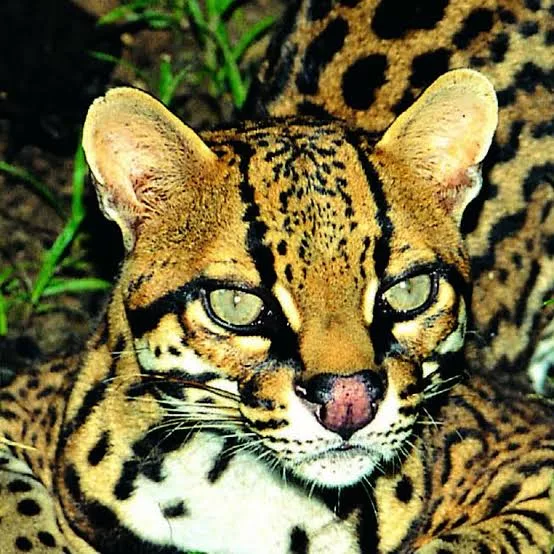
The ocelot is a medium-sized spotted wild cat that reaches 40–50 cm at the shoulders and weighs between 7 and 15.5 kg on average. It is native to the southwestern United States, Mexico, Central and South America, and the Caribbean islands of Trinidad and Margarita. Carl Linnaeus scientifically described it in 1758. Wikipedia