
Parapsychology Main article: Parapsychology
Participant of a Ganzfeld experiment which proponents say may show evidence of telepathy.
Experimental investigation of the paranormal has been conducted by parapsychologists. J. B. Rhine popularized the now famous methodology of using card-guessing and dice-rolling experiments in a laboratory in the hopes of finding evidence of extrasensory perception. However, it was revealed that Rhine’s experiments contained methodological flaws and procedural errors.
In 1957, the Parapsychological Association was formed as the preeminent society for parapsychologists. In 1969, they became affiliated with the American Association for the Advancement of Science. Criticisms of the field were focused in the creation (in 1976) of the Committee for the Scientific Investigation of Claims of the Paranormal (now called the Committee for Skeptical Inquiry) and its periodical, the Skeptical Inquirer.
Eventually, more mainstream scientists became critical of parapsychology as an endeavor, and statements by the National Academies of Science and the National Science Foundation cast a pall on the claims of evidence for parapsychology. Today, many cite parapsychology as an example of a pseudoscience. Parapsychology has been criticized for continuing investigation despite being unable to provide convincing evidence for the existence of any psychic phenomena after more than a century of research.
By the 2000s, the status of paranormal research in the United States had greatly declined from its height in the 1970s, with the majority of work being privately funded and only a small amount of research being carried out in university laboratories. In 2007, Britain had a number of privately funded laboratories in university psychology departments. Publication remained limited to a small number of niche journals, and to date there have been no experimental results that have gained wide acceptance in the scientific community as valid evidence of the paranormal.
Participant-observer approach
A ghost hunter taking an EMF reading, which proponents claim may be connected to paranormal activity
While parapsychologists look for quantitative evidence of the paranormal in laboratories, a great number of people immerse themselves in qualitative research through participant-observer approaches to the paranormal. Participant-observer methodologies have overlaps with other essentially qualitative approaches, including phenomenological research that seeks largely to describe subjects as they are experienced, rather than to explain them.
Participant observation suggests that by immersing oneself in the subject that is being studied, a researcher is presumed to gain an understanding of the subject. Criticisms of participant observation as a data-gathering technique are similar to criticisms of other approaches to the paranormal, but also include an increased threat to the scientific objectivity of the researcher, unsystematic gathering of data, reliance on subjective measurement, and possible observer effects (i.e. observation may distort the observed behavior). Specific data-gathering methods, such as recording EMF (electromagnetic field) readings at haunted locations, have their own criticisms beyond those attributed to the participant-observer approach itself.
Participant observation, as an approach to the paranormal, has gained increased visibility and popularity through reality television programs like Ghost Hunters, and the formation of independent ghost hunting groups that advocate immersive research at alleged paranormal locations. One popular website for ghost hunting enthusiasts lists over 300 of these organizations throughout the United States and the United Kingdom.
Skeptical scientific investigation
James Randi was a well-known investigator of paranormal claims.
Scientific skeptics advocate critical investigation of claims of paranormal phenomena: applying the scientific method to reach a rational, scientific explanation of the phenomena to account for the paranormal claims, taking into account that alleged paranormal abilities and occurrences are sometimes hoaxes or misinterpretations of natural phenomena.
A way of summarizing this method is by the application of Occam’s razor, which suggests that the simpler solution is usually the correct one. The Committee for Skeptical Inquiry (CSI), formerly the Committee for the Scientific Investigation of Claims of the Paranormal (CSICOP), is an organization that aims to publicize the scientific, skeptical approach. It carries out investigations aimed at understanding paranormal reports in terms of scientific understanding, and publishes its results in the Skeptical Inquirer magazine.
CSI’s Richard Wiseman draws attention to possible alternative explanations for perceived paranormal activity in his article, The Haunted Brain. While he recognizes that approximately 15% of people believe they have experienced an encounter with a ghost, he reports that only 1% report seeing a full-fledged ghost, while the rest report strange sensory stimuli, such as seeing fleeting shadows or wisps of smoke, or the sensation of hearing footsteps or feeling a presence. Wiseman makes the claim that, rather than experiencing paranormal activity, it is activity within our own brains that creates these strange sensations.
Michael Persinger proposed that ghostly experiences could be explained by stimulating the brain with weak magnetic fields. Swedish psychologist Pehr Granqvist and his team, attempting to replicate Persinger’s research, determined that the paranormal sensations experienced by Persinger’s subjects were merely the result of suggestion, and that brain stimulation with magnetic fields did not result in ghostly experiences. Oxford University Justin Barrett has theorized that “agency”—being able to figure out why people do what they do—is so important in everyday life that it is natural for our brains to work too hard at it, thereby detecting human or ghost-like behavior in everyday meaningless stimuli.
James Randi, an investigator with a background in illusion, felt that the simplest explanation for those claiming paranormal abilities is often trickery, illustrated by demonstrating that the spoon bending abilities of psychic Uri Geller can easily be duplicated by trained stage magicians.
He was also the founder of the James Randi Educational Foundation and its million dollar challenge that offered a prize of $1,000,000 to anyone who could demonstrate evidence of any paranormal, supernatural or occult power or event, under test conditions agreed to by both parties. Despite many declarations of supernatural ability, the prize was never claimed.
Psychology Main article: Anomalistic psychology
In “anomalistic psychology”, paranormal phenomena have naturalistic explanations resulting from psychological and physical factors, which have sometimes given the impression of paranormal activity to some people, in fact, where there have been none. The psychologist David Marks wrote that paranormal phenomena can be explained by magical thinking, mental imagery, subjective validation, coincidence, hidden causes, and fraud.
According to studies, some people tend to hold paranormal beliefs because they possess psychological traits that make them more likely to misattribute paranormal causation to normal experiences. Research has also discovered that cognitive bias is a factor underlying paranormal belief.
Chris French, founder of the Anomalistic Psychology Research Unit.
Many studies have found a link between personality and psychopathology variables correlating with paranormal belief. Some studies have also shown that fantasy proneness correlates positively with paranormal belief.
Bainbridge (1978) and Wuthnow (1976) found that the most susceptible people to paranormal belief are those who are poorly educated, unemployed, or have roles that rank low among social values. The alienation of these people due to their status in society is said to encourage them to appeal to paranormal or magical beliefs.
Research has associated paranormal belief with low cognitive ability, low IQ, and a lack of science education. Intelligent and highly educated participants involved in surveys have proven to have less paranormal belief. Tobacyk (1984) and Messer and Griggs (1989) discovered that college students with better grades have less belief in the paranormal.
In a case study (Gow, 2004) involving 167 participants, the findings revealed that psychological absorption and dissociation were higher for believers in the paranormal. Another study involving 100 students had revealed a positive correlation between paranormal belief and proneness to dissociation. A study (Williams et al. 2007) discovered that “neuroticism is fundamental to individual differences in paranormal belief, while paranormal belief is independent of extraversion and psychoticism”.
A correlation has been found between paranormal belief and irrational thinking.
In an experiment Wierzbicki (1985) reported a significant correlation between paranormal belief and the number of errors made on a syllogistic reasoning task, suggesting that believers in the paranormal have lower cognitive ability. A relationship between narcissistic personality and paranormal belief was discovered in a study involving the Australian Sheep-Goat Scale.
De Boer and Bierman wrote:
In his article ‘Creative or Defective’, Radin (2005) asserts that many academics explain the belief in the paranormal by using one of the three following hypotheses: Ignorance, deprivation, or deficiency. ‘The ignorance hypothesis asserts that people believe in the paranormal because they’re uneducated or stupid. The deprivation hypothesis proposes that these beliefs exist to provide a way to cope in the face of psychological uncertainties and physical stressors. The deficiency hypothesis asserts that such beliefs arise because people are mentally defective in some way, ranging from low intelligence or poor critical thinking ability to a full-blown psychosis (Radin). The deficiency hypothesis gets some support from the fact that the belief in the paranormal is an aspect of a schizotypical personality (Pizzagalli, Lehman, and Brugger, 2001).
A psychological study involving 174 members of the Society for Psychical Research completed a delusional ideation questionnaire and a deductive reasoning task. As predicted, the study showed that “individuals who reported a strong belief in the paranormal made more errors and displayed more delusional ideation than skeptical individuals”. There was also a reasoning bias, which was limited to people who reported a belief in, rather than experience of, paranormal phenomena. The results suggested that reasoning abnormalities may have a causal role in the formation of paranormal beliefs.
Research has shown that people reporting contact with aliens have higher levels of absorption, dissociativity, fantasy proneness and tendency to hallucinate.
Findings have shown in specific cases that paranormal belief acts as a psychodynamic coping function and serves as a mechanism for coping with stress. Survivors from childhood sexual abuse, violent and unsettled home environments have reported having higher levels of paranormal belief.
A study of a random sample of 502 adults revealed paranormal experiences were common in the population which were linked to a history of childhood trauma and dissociative symptoms. Research has also suggested that people who perceive themselves as having little control over their lives may develop paranormal beliefs to help provide an enhanced sense of control. The similarities between paranormal events and descriptions of trauma have also been noted.
Gender differences in surveys on paranormal belief have reported women scoring higher than men overall and men having greater belief in UFOs and extraterrestrials. Surveys have also investigated the relationship between ethnicity and paranormal belief. In a sample of American university students (Tobacyk et al. 1988) it was found that people of African descent have a higher level of belief in superstitions and witchcraft while belief in extraterrestrial life forms was stronger among people of European descent. Otis and Kuo (1984) surveyed Singapore university students and found Chinese, Indian and Malay students to differ in their paranormal beliefs, with the Chinese students showing greater skepticism.
According to American surveys analysed by Bader et al (2011) African Americans have the firmest belief in the paranormal, and while the findings are not uniform, the “general trend is for whites to show lesser belief in most paranormal subjects”. Polls show that about fifty percent of the United States population believes in the paranormal. Robert L. Park says a lot of people believe in it because they “want it to be so”.
A 2013 study that utilized a biological motion perception task discovered a “relation between illusory pattern perception and supernatural and paranormal beliefs and suggest that paranormal beliefs are strongly related to agency detection biases”.[41]
A 2014 study discovered that schizophrenic patients have more belief in psi than healthy adults.
Neuroscience
Some scientists have investigated possible neurocognitive processes underlying the formation of paranormal beliefs. In a study (Pizzagalli et al, 2000), data demonstrated that “subjects differing in their declared belief in and experience with paranormal phenomena as well as in their schizotypal ideation, as determined by a standardized instrument, displayed differential brain electric activity during resting periods.” Another study (Schulter and Papousek, 2008) wrote that paranormal belief can be explained by patterns of functional hemispheric asymmetry that may be related to perturbations during fetal development.
It was also realized that people with higher dopamine levels have the ability to find patterns and meanings where there are none. This is why scientists have connected high dopamine levels with paranormal belief.
Criticism
Some scientists have criticized the media for promoting paranormal claims.
In a report by Singer and Benassi in 1981, they wrote that the media may account for much of the near universality of paranormal belief, as the public is constantly exposed to films, newspapers, documentaries, and books endorsing paranormal claims, while critical coverage is largely absent. According to Paul Kurtz, “Regarding the many talk shows that constantly deal with paranormal topics, the skeptical viewpoint is rarely heard; and when it is permitted to be expressed, it is usually sandbagged by the host or other guests.” Kurtz described the popularity of public belief in the paranormal as a “quasi-religious phenomenon”, a manifestation of a transcendental temptation, a tendency for people to seek a transcendental reality that cannot be known by using the methods of science. Kurtz compared this to a primitive form of magical thinking.
Terence Hines has written that on a personal level, paranormal claims could be considered a form of consumer fraud as people are “being induced through false claims to spend their money—often large sums—on paranormal claims that do not deliver what they promise” and uncritical acceptance of paranormal belief systems can be damaging to society.[86]
Belief polls
This article needs to be updated. Please help update this article to reflect recent events or newly available information. (November 2021)
While the existence of paranormal phenomena is controversial and debated passionately by both proponents of the paranormal and by skeptics, surveys are useful in determining the beliefs of people regarding paranormal phenomena. These opinions, while not constituting scientific evidence for or against, may give an indication of the mindset of a certain portion of the population (at least among those who answered the polls). The number of people worldwide who believe in parapsychological powers has been estimated to be 3 to 4 billion.
A survey conducted in 2006 by researchers from Australia’s Monash University[88] sought to determine the types of phenomena that people claim to have experienced and the effects these experiences have had on their lives. The study was conducted as an online survey with over 2,000 respondents from around the world participating. The results revealed that around 70% of the respondents believe they have had an unexplained paranormal event that changed their life, mostly in a positive way. About 70% also claimed to have seen, heard, or been touched by an animal or person that they knew was not there; 80% have reported having a premonition, and almost 50% stated they recalled a previous life.
Polls were conducted by Bryan Farha at Oklahoma City University and Gary Steward of the University of Central Oklahoma in 2006. They found fairly consistent results compared to the results of a Gallup poll in 2001.
A survey by Jeffrey S. Levin, associate professor at Eastern Virginia Medical School, found that more than two-thirds of the United States population reported having at least one mystical experience. A 1996 Gallup poll estimated that 71% of the people in the U.S. believed that the government was covering up information about UFOs. A 2002 Roper poll conducted for the Sci Fi channel reported that 56% thought UFOs were real craft and 48% that aliens had visited the Earth.
A 2001 National Science Foundation survey found that 9% of people polled thought astrology was very scientific, and 31% thought it was somewhat scientific. About 32% of Americans surveyed stated that some numbers were lucky, while 46% of Europeans agreed with that claim. About 60% of all people polled believed in some form of Extra-sensory perception, and 30% thought that “some of the unidentified flying objects that have been reported are really space vehicles from other civilizations.”
In 2017, the Chapman University Survey of American Fears asked about seven paranormal beliefs and found that “the most common belief is that ancient advanced civilizations such as Atlantis once existed (55%). Next was that places can be haunted by spirits (52%), aliens have visited Earth in our ancient past (35%), aliens have come to Earth in modern times (26%), some people can move objects with their minds (25%), fortune tellers and psychics can survey the future (19%), and Bigfoot is a real creature. Only one-fourth of respondents didn’t hold at least one of these beliefs.”
Paranormal challenges
Main article: List of prizes for evidence of the paranormal
In 1922, Scientific American offered two US $2,500 offers:
(1) for the first authentic spirit photograph made under test conditions, and
(2) for the first psychic to produce a “visible psychic manifestation”. Harry Houdini was a member of the investigating committee. The first medium to be tested was George Valiantine, who claimed that in his presence spirits would speak through a trumpet that floated around a darkened room. For the test, Valiantine was placed in a room, the lights were extinguished, but unbeknownst to him, his chair had been rigged to light a signal in an adjoining room if he ever left his seat. Because the light signals were tripped during his performance, Valiantine did not collect the award. The last to be examined by Scientific American was Mina Crandon in 1924.
Since then, many individuals and groups have offered similar monetary awards for proof of the paranormal in an observed setting. These prizes have a combined value of over $2.4 million.[95]
The James Randi Educational Foundation offered a prize of a million dollars to a person who could prove that they had supernatural or paranormal abilities under appropriate test conditions. Several other skeptic groups also offer a monetary prize for proof of the paranormal, including the largest group of paranormal investigators, the Independent Investigations Group, which has chapters in Hollywood, Atlanta, Denver, Washington, D.C., Alberta, B.C., and San Francisco. The IIG offers a $100,000 prize and a $5,000 finders fee if a claimant can prove a paranormal claim under 2 scientifically controlled tests. Founded in 2000, no claimant has passed the first (and lower odds) of the test.
Ghost Stories (2017) and The Frighteners (1996) are among the highest-rated films tagged with parapsychology, alongside the critically acclaimed The Matrix (1999).
Top recommendations for paranormal investigation and psychic themes include:
The Conjuring (2013): Features real-life investigators Ed and Lorraine Warren helping a family terrorized by a dark presence
The Sixth Sense (1999): A psychological thriller featuring a child psychologist helping a boy who sees ghosts.
Sea of Souls (2004): A TV series following a parapsychologist and his team investigating paranormal activity.
The Atticus Institute (2015): A horror film about a facility studying individuals with supernatural abilities.
The Haunting (1963): A classic film where a researcher investigates a haunted mansion to prove the existence of ghosts.
Fear No Evil (1969): A psychiatrist specializing in the occult investigates a possession linked to an antique mirror.
The Changeling (1980): A musician in a historic mansion investigates a haunting spectre.
Grave Encounters (2011): A paranormal investigation team documents their stay in a haunted asylum.
Frankly, I remain skeptical.
This is what the edited “Google database extractions” say:
“Paranormal phenomena are experiences or events that appear unusual or unnatural and cannot be explained by known scientific principles or conventional sensory perception. These occurrences are often attributed to magical, supernatural, or folkloric origins, such as ghosts, telepathy, telekinesis, and UFOs, rather than rational scientific explanations.
Common categories of paranormal phenomena include:
- Sensory and Apparitional Events: Sightings of ghosts, shadow figures, or apparitions, along with unexplained sounds like EVP (Electronic Voice Phenomena).
- Psychic Abilities: Extrasensory perception (ESP), which encompasses telepathy (mind-to-mind communication), precognition (future vision), and clairvoyance (distant perception).
- Psychokinetic Activity: Poltergeist phenomena involving the unexplained movement of objects or disturbances, often linked to psychokinetic energy.
- Anomalous Experiences: Out-of-body experiences, time slips, and encounters with extraterrestrials or cryptids.
While parapsychology is the field dedicated to investigating these claims using scientific methods, the scientific consensus generally attributes paranormal experiences to misinterpretations, psychological factors like pareidolia, or physiological states such as temporal lobe seizures, rather than legitimate supernatural forces.”
So, the (biased) edited databases at Google demur. I am not surprised. Now, my father Jim, [the Rev. James Martin Flanagan (AKA Martin James Flanagan III] was a “parapsychologist.” But one must consider his frame of reference. Jim was born to Martin James Flanagan and Velzora Laura Brown-Flanagan. Martin (my “Bompa,”) was an auto mechanic. He learned these skills from his father and did not have any significant intellectual depth.
Bompa smoked non-filter Pall Mall cigarettes and these were consumed with the accoutrement of a sophisticated apparatus at the front left of his easy chair. There rested a sophisticated electrical plug-in ashtray. The base of the unit, which rested nearly flush with the carpet, was illuminated with a green light. The top of the ash tray was level with the left arm of his easy chair and included various places which could hold his Pall Mall cigarettes where they smoldered, between puffs. Bompa inhaled deeply and they breathed the slightly less toxic remnants of the tobacco back into the room, for all of us to appreciate, or not. Another curious eccentricity of Bompa, was a wooden container which sat at the base of his easy chair, nearly behind it. When easing back into his chair, Bompa would very carefully examine the countenances of every woman in the room. When my grandmother, Nana; my mom Lois, and my sisters Kathleen and Tricia were somehow all distracted, Bompa would wink at me, reach his right hand down into the wooden container, and pull out a fifth of whiskey and take an amble slug, and the bottle mysteriously disappeared back inside the wooden box. 20 years later, when I mentioned this to my older sister Kathleen, she swore she had never seen Bomba take one drink. I found this fascinating.
Nana, (Velzora Laura Brown-Flanagan) was a horse of another color. Nana kept a parakeet in her kitchen and downstairs maintained a nearly famous doll hospital. When I peeked around the corner at the bottom of the stairs, there were workbenches Bompa had constructed. These included various tools of the trade, China doll heads, arms, lets and other body parts… along with hundreds of thousands of eyes… some were singular, other connected but all of them a critical piece of one of her dolls. (She is still today, 70 some years later, found recorded in databases as a “doll doctor.” In addition to professional engagement with her doll hospital, Nana (Velzora) also told strangely accurate fortunes on the round oak dining room table… using playing cards. As I recall, these were eerie tales… and accurate enough to make the hair stand up on the back of our necks while she recounted these dreams and visions. Velzora tended a small garden in the backyard in Cedar Falls, Iowa. She grew a variety of vegetables, herbs and spices. When walking downstairs from her kitchen, there was a landing for the side door. There, against the wall, was where she kept her fish bucket, tackle boxes and bags and several fishing poles hung from or leaned against the wall. Nana and I would turn over large slabs in her garden or a couple of logs in the back yard and harvest worms. Sometimes we would also harvest crickets the night before, when they were active in the grasses. Then with our bait, tackle, poles and gear, we would head out over the mounded railroad tracks which ran behind her house, and then down the bank to the shore of the Cedar river. In the center of the river were falls from the dam, churning up waters and foam from the roaring waters, but in the eddies nearer the shore is where we would cast our lines.
Nana taught me how to string the line so the bait hung just above the river bottom, suspended from read and white bobbers… until a large Catfish might take them under to then be hooked, reeled-in, netted and captured for later gutting, frying or baking and eventual consumption. Nana’s ancestors were Santee Sioux, and perhaps her various eccentricities reflected her indigenous cultural roots… I was glad that she taught me to fish.
Bompa died young at 67 from cirrhosis of the liver and emphysema from whiskey and cigarettes.
Nana lived longer but was eventually consumed neurodegenerative conditions… She suffered from cognitive decline, as do many older adults… in reference to concerns about or difficulty with a person’s thinking, memory, concentration, and other brain functions beyond what is typically expected due to aging.
Cognitive decline, also known as cognitive impairment, can come on suddenly or gradually, and it can be permanent or temporary. It can be scary for the person experiencing the symptoms as well as their family and friends. There are often underlying health issues affecting the mind’s function (The most common conditions that cause cognitive decline include Alzheimer’s disease, Lewy Body disease, Parkinson’s disease, and frontotemporal degeneration (damage and loss of nerve cells in the brain). Most psychiatric conditions can cause problems with memory, thinking, or concentration. Depression and anxiety, bipolar disorder, schizophrenia, or other forms of major mental illness are the most common contributing factors.Those need to be detected and treated if at all possible. Sometmes the treatment can be worse than the ailment. Sedatives, tranquilizers, and anticholinergic medications are the most common types of medicine that interfere with proper brain function. Anticholinergic drugs block the chemical (neurotransmitter) released by nerve cells to send signals to other cells. This can affect muscle contractions in the body as well as learning and memory in the brain. …I miss the fortune-telling, wise woman, who taught me to fish, garden and appreciate nuances in life which range beyond any insubstantial small wisdom.
My dad, was raised in the Roman Catholic Church, which he found a bit strange. Over time he became a Quaker, then a Friend… and eventually he did graduate work and was ordained as a minister. But he eventually became enthusiastic about paranormal phenomena:
- He experienced what he described as ghosts, shadow figures, or apparitions, along with unexplained sounds.
- Jim did exhibit what might be called psychic abilities: perhaps including extrasensory perception (ESP), telepathy (mind-to-mind communication), precognition (future vision), and clairvoyance (distant perception).
- Once when I was between classes at Antioch College and a work-study assignment in Massachusetts, he called me back to the bedroom and asked if I had been standing over his bed with bandages all over my head. I had been reading in the kitchen and demurred. But in Massachusetts, I suffered from a skull fracture and wore such bandages for a time.
- I am not certain if my father experienced psychokinetic activity: Poltergeist phenomena involving the unexplained movement of objects or disturbances, often linked to psychokinetic energy.
- But I have personally experienced anomalous experiences: Out-of-body experiences, time slips. I have not, as yet had any encounters with extraterrestrials or cryptids.
Cryptids are animals or other beings whose present existence is disputed or unsubstantiated by science, with the study of these creatures known as cryptozoology.
While often considered a pseudoscience due to reliance on anecdotal evidence, the term historically includes species now recognized by science, such as the Komodo dragon, okapi, giant squid, and gorilla.
I have experienced strange and wonderful out of body experiences. One involved progressive dreams. Jumping up, then jumping higher, then being suspended and eventually leaping and soaring, just missing the brickwork across the way until zooming up into the sky, looking at forests, hills and the Missouri river meeting the Mississippi below me. A few years later, while awake and flying a Cessna 152, I flew across a similar intersection as I had seen in my dreams, and saw in real life, the very same things. Once I accomplished this dream-flight, the out of body experiences sadly ended.
The best writing about paranormal phenomena spans fictional narratives, investigative nonfiction, and scientific analysis. For fiction, the genre is defined by authors like Stephen King (The Shining), Edgar Allan Poe (The Tell-Tale Heart), and Shirley Jackson (The Haunting of Hill House), who blend psychological horror with supernatural elements. - Nonfiction and investigative works offer real-world accounts and academic studies. Key titles include Ghostland by Colin Dickey for its literary exploration of American hauntings, Imminent by Luis Elizondo for the Pentagon’s UFO investigation, and Poltergeists by Alan Gauld and A.D. Cornell for scholarly analysis of haunting cases.
- For scientific and skeptical perspectives, The Demon-Haunted World by Carl Sagan and Paranormality by Richard Wiseman examine the psychology behind why people believe in and/or experience the paranormal.
Scientific approaches to researching psychical and other paranormal phenomena began in the mid-nineteenth century. At this time, spiritualism was spreading rapidly across the US and Europe.
Seance-room phenomena such as materializations and levitations appeared to violate the laws of physics and this attracted the interest of several eminent scientists, including Michael Faraday and Sir William Crookes.
In 1882, a number of Britain’s leading scientists and scholars founded the Society for Psychical Research with the aim of promoting scientific investigation of spiritualist and other seemingly paranormal phenomena.
For many years, the majority of psychical researchers continued with investigations of spiritualist mediums and spontaneous phenomena. However, in the 1930s, because of the difficulty of ensuring properly controlled studies in these areas, J.B. Rhine pioneered the use of more formal laboratory-based procedures to investigate the psychic abilities of ordinary people.
Rhine worked in the psychology department at Duke University and he chose the term ‘parapsychology’ for his experimental approach, to distinguish it from traditional psychical research.
While research into mediumship and spontaneous cases continues, and is especially popular among amateur groups, many of today’s professional researchers have been trained in laboratory-based parapsychological methods.
With few exceptions, parapsychology and psychical research have been poorly supported by universities and funding bodies. As a result, the number of professionals researchers in the field remains small. The Parapsychological Association is the leading international professional body. It has a membership of around 300.
Notable researchers
Alvarado, Carlos S. (1955-2021)
Carlos Alvarado PhD was a parapsychologist on the faculty of Atlantic University and the University of Virginia. His research focussed on surveys of psychic experiences and on the history of psychical research. He was a past President (1995; 2002-2003) of the Parapsychological Association.
Carlos Alvarado (Psi Encyclopedia)
Auerbach, Loyd
Loyd Auerbach is a parapsychologist, mentalist, ghost hunter, and writer on paranormal topics.
Loyd Auerbach (Psi Encyclopedia)
Loyd Auerbach (Wikipedia)
Baker, Ian
Ian Baker PhD is a Lecturer in Psychology and parapsychologist at the University of Derby. His research has focussed on research into remote staring. He was formerly Editor of the European Journal of Parapsychology.
Ian S. Baker (Psi Encyclopedia)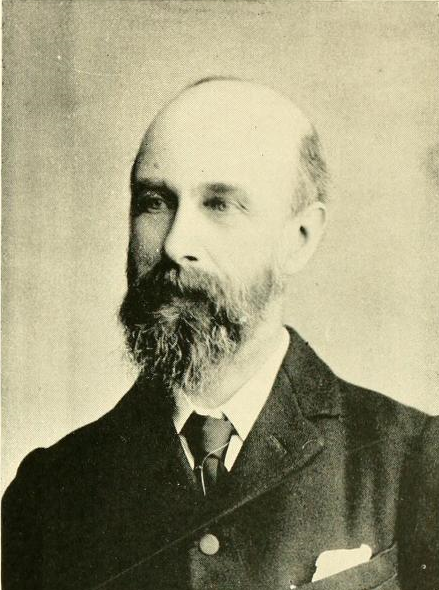 Sir William Barrett
Barrett, William Fletcher (1844-1925)
Sir William Barrett FRS was an English physicist and one of the founders of the Society for Psychical Research. He carried out early research on thought transference, Mesmerism, poltergeists and dowsing.
William F. Barrett (Psi Encyclopedia)
William F. Barrett (Wikipedia)
Barrington, Mary Rose (1926-2020)
Mary Rose Barrington was a British parapsychologist specializing in the investigation of spontaneous cases. She was a Vice-President of the Society for Psychical Research.
Mary Rose Barrington (Psi Encyclopedia)
Mary Rose Barrington (Wikipedia)
Beloff, John (1920-2006)
John Beloff was a British psychologist and pioneer parapsychologist who was instrumental in setting up the Koestler Chair of Parapsychology at Edinburgh University. He was also President of the Society for Psychical Research (1974-1976).
John Beloff (Psi Encyclopedia)
John Beloff (Wikipedia)
Bender, Hans (1907-1991)
Hans Bender was a pioneering German parapsychologist who established the parapsychological Institut für Grenzgebiete der Psychologie und Psychohygiene (IGPP) in Freiburg, Germany. He is also known for his studies of hauntings and poltergeists, including the famous Rosenheim Poltergeist case.
Hans Bender (Wikipedia)
Bierman, Dick J.
Dick Bierman PhD (Universities of Utrecht and Amsterdam) is a physicist and parapsychologist who is interested in the relationship between quantum physics and consciousness. He is known for developing true random generators (RNG) and for his involvement in the Global Consciousness Project.
Dick Bierman (Psi Encyclopedia) Susan Blackmore
Blackmore, Susan J. (1951- )
Susan Blackmore is a British psychologist, researcher, writer and broadcaster. Her interests include consciousness studies, altered states and parapsychology. She is a prominent sceptic who seeks psychological explanations for anomalous experiences.
Susan J. Blackmore (Psi Encyclopedia)
Susan Blackmore (Wikipedia)
Official website
Braud, William G. (1942-2012)
William Braud PhD was a professor of psychology at the Institute of Transpersonal Psychology (now Sofia University). His research in transpersonal psychology and parapsychology focussed on exceptional human experiences, alternative ways of knowing, and expanded research methods.
William Braud (Psi Encyclopedia)
William G. Braud (Wikipedia)
Braude, Stephen E. (1945- )
Stephen E. Braude PhD is an American philosopher and a past president of the Parapsychological Association (1991).
Stephen E. Braude (Psi Encyclopedia)
Stephen E. Braude (Wikipedia)
Broughton, Richard S.
Richard Broughton PhD is an American psychologist and parapsychologist. He is Senior Lecturer in Psychology at the University of Northampton (UK). He was formerly Director of the Institute for Parapsychology (now the Rhine Research Center) and President of Intuition Laboratories, Inc. He is a past President of the Parapsychological Association (1987; 1996) and Society for Psychical Research (2011-2015).
Richard S. Broughton (Psi Encyclopedia)
Cardeña, Etzel (1957- )
Etzel Cardeña PhD is a Mexican psychologist and parapsychologist. He is Thorsen Professor of Psychology at Lund University, Sweden. His research focuses on the areas of hypnosis, dissociative states and anomalous experience. He is a past President of the Parapsychological Association (2008-2009).
Etzel Cardeña (Psi Encyclopedia)
Etzel Cardeña (Wikipedia)
Carr, Bernard (1949- )
Bernard Carr PhD is Professor of Mathematics and Astronomy at Queen Mary, University of London. He has a particular interest in theoretical relationships between science, religion and psychic phenomena. He served (2000-2004) as President of the Society for Psychical Research.
Bernard J. Carr (Psi Encyclopedia)
Bernard Carr (Wikipedia) Hereward Carrington
Carrington, Hereward (1880-1958)
Hereward Carrington was a prominent British-American psychical researcher and author, most famous for his investigations into spiritualism and mediumship.
Hereward Carrington (Psi Encyclopedia)
Hereward Carrington (Wikipedia)
Chacon, Christopher
Christopher Chacon is an independent researcher and consultant on mysticism and the paranormal.
Biography (SurvivalAfterDeath.info)
Crawford, William J. (1881-1920)
William Jackson Crawford was a professor of engineering at Queens University, Belfast, and psychical researcher. He investigated the Irish physical medium Kathleen Goligher and wrote a series of books about the ‘Goligher Circle’ seances. Based on these studies, he developed scientific hypotheses for telekinesis and ectoplasm. However, Crawford’s investigations were seriously criticised for their lack of scientific controls and Kathleen Goligher’s mediumship is now generally considered to be fraudulent.
William Crawford (Psi Encyclopedia)
Goligher Circle (Psi Encyclopedia)
Kathleen Goligher (Wikipedia) Sir William Crookes
Crookes, William (1832-1919)
Sir William Crookes OM, FRS, was a British chemist and physicist who carried out early scientific research into spiritualism and mediumship. He is particularly known for his investigations of the physical mediums Florence Cook, and Daniel Dunglas Home.
William Crookes (Psi Encyclopedia)
William Crookes (Wikipedia)
Delanoy, Deborah
Deborah Delanoy PhD is an American psychologist and parapsychologist whose research focuses on methods of ESP testing and training, physiological aspects of psi, and direct mental interaction with living systems (DMILS). She is a past President of the Parapsychological Association (1994) and the Society for Psychical Research (2007-2011).
Deborah Delanoy (Psi Encyclopedia)
Doyle, Arthur Conan (1859-1930) Sir Arthur Conan Doyle with ‘spirit’
Sir Arthur Conan Doyle was a Scottish physician and writer, famous as the creator of Sherlock Holmes. Conan Doyle developed a profound interest in spiritualism and mediumship. He became convinced of the reality of fairies, reinforced by his acceptance of the Cottingley Fairies photographs.
Arthur Conan Doyle (Psi Encyclopedia)
Arthur Conan Doyle (Wikipedia)
Edge, Hoyt
Hoyt Edge PhD is an American philosopher and parapsychologist. His work explores the philosophical implications of parapsychological phenomena. He has also undertaken empirical research on direct mental interaction with living systems (DMILS). He is a past President of the Parapsychological Association (1989).
Hoyt Edge (Psi Encyclopedia)
Ehrenwald, Jan (1900-1988)
Jan Ehrenwald was a Czech-American psychiatrist, psychotherapist and parapsychologist. His work explored the relationship between extrasensory perception and depth psychology.
Jan Ehrenwald (Wikipedia)
Eisenbud, Jule (1908-1999)
Jule Eisenbud MD was an American psychiatrist whose parapsychological work explored the telepathic experiences of patients and analysts. He is most well-known for his investigations of the “thoughtographs” produced by Ted Serios.
Jule Eisenbud (Psi Encyclopedia)
Faraday, Michael (1791-1867)
Michael Faraday FRS was a British chemist and physicist, famous for his scientific investigations into electricity and magnetism. In psychical research, he is best known for his demonstrations that table-turning is caused by unconscious muscular movements of the sitters and for his failure to attend the seances of D.D. Home.
Michael Faraday (Wikipedia)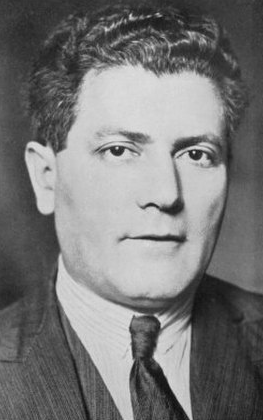 Nandor Fodor
Fodor, Nandor (1895-1964)
Nandor Fodor was a British-American psychologist and parapsychologist, known for his studies of hauntings, poltergeists and mediumship.
Nandor Fodor (Wikipedia)
Fontana, David (1934-2010)
David Fontana was a British psychologist and psychical researcher. He was a past President (1995-1998) of the Society for Psychical Research and Founding Chair of the British Psychological Society’s Transpersonal Psychology Section. The author of numerous books in the areas of spirituality and psychical experience, he had a special research interest in survival, mediumship, poltergeists and electronic voice phenomena.
David Fontana (Psi Encyclopedia)
David Fontana (Wikipedia)
French, Christopher C. (1956- )
Chris French is Professor of Psychology at Goldsmiths, University of London. His research interests include the psychology of paranormal beliefs and anomalous experiences. He set up the Anomalistic Psychology Research Unit (APRU) at Goldsmiths in 2000. French is a leading paranormal sceptic.
Christopher C. French (Psi Encyclopedia)
Chris French (Wikipedia)
Garrett, Eileen J. (1893-1970)
Eileen Garrett was an Irish medium who was investigated by J.B. Rhine and other researchers. She founded the Parapsychology Foundation in 1951 to support scientific investigations into psychic abilities.
Eileen J. Garrett (Wikipedia)
Gauld, Alan (1932- )
Alan Gauld was formerly Reader in Psychology at the University of Nottingham. He is a past President (1989-1992) of the Society for Psychical Research. He has research interests in mediumship and survival, and in the history of psychical research.
Alan Gauld (Psi Encyclopedia)
Alan Gauld (Wikipedia)
Greyson, Bruce C. (1946- )
Bruce Greyson is Professor of Psychiatry at the University of Virginia. He is a leading researcher into near-death experiences.
Bruce Greyson (Psi Encyclopedia)
Bruce Greyson (Wikipedia)
Grosse, Maurice (1919-2006)
Maurice Grosse was a British psychical researcher, famous as the chief investigator of the Enfield Poltergeist case. He was for many years the Chairman of the Spontaneous Phenomena Committee of the Society for Psychical Research.
Maurice Grosse (Psi Encyclopedia)
Maurice Grosse (Wikipedia) Edmund Gurney
Gurney, Edmund (1847-1888)
Edmund Gurney was a British psychologist and psychical researcher. He was an early researcher into mediumship, telepathy and hypnosis.
Edmund Gurney (Psi Encyclopedia)
Edmund Gurney (Wikipedia)
Haraldsson, Erlendur (1931-2020)
Erlendur Haraldsson PhD was Professor Emeritus of psychology at the University of Iceland. He was a leading researcher into reincarnation and death-bed experiences.
Erlendur Haraldsson (Psi Encyclopedia)
Erlendur Haraldsson (Wikipedia)
Hodgson, Richard (1855-1905)
Richard Hodgson LLD was an Australian psychical researcher. He is famous for his damning investigation of Madame Blavatsky and for his initially sceptical but later supportive investigations of the trance medium Mrs Leonora Piper.
Richard Hodgson (Psi Encyclopedia)
Richard Hodgson (Wikipedia)
Holzer, Hans (1920-2009)
Hans Holzer was an Austrian-American paranormal researcher and author. He carried out investigations into mediumship and hauntings, including the famous Amityville Horror case.
Hans Holzer (Psi Encyclopedia)
Hans Holzer (Wikipedia)
Honorton, Charles (1946-1992)
Charles Honorton was an American experimental parapsychologist. His research focussed mainly on extrasensory perception (ESP). He developed and pioneered the Ganzfeld technique for investigating ESP.
Charles Honorton (Psi Encyclopedia)
Charles Honorton (Wikipedia) Harry Houdini
Houdini, Harry (1874-1926)
Harry Houdini was a Hungarian-born American magician and escapologist. Sceptical of spiritualistic phenomena, Houdini carried out investigations to debunk and expose fraudulent psychics and mediums.
Harry Houdini (Psi Encyclopedia)
Harry Houdini (Wikipedia)
Hufford, David J.
D.J. Hufford PhD was Professor of Medical Humanities at Penn State College of Medicine. His research focuses on the ethnographic and phenomenological study of spiritual and folk beliefs. He is particularly known for his research on sleep paralysis and the Old Hag tradition as an experiential foundation for belief in the supernatural.
David Hufford (Wikipedia)
Hyman, Ray (1928- )
Ray Hyman is Professor Emeritus of Psychology at the University of Oregon. A skeptic towards the paranormal, he was a founding member of the Committee for the Scientific Investigation of Claims of the Paranormal (CSICOP).
Ray Hyman (Psi Encyclopedia)
Ray Hyman (Wikipedia)
Hyslop, James H. (1854-1920)
James H. Hyslop was a philosopher, psychologist, and early psychical researcher. He is known for his investigations of mediumship and several books on psychical research and the afterlife.
James Hervey Hyslop (Psi Encyclopedia)
James H. Hyslop (Wikipedia)
Irwin, Harvey J.
Harvey Irwin was formerly associate professor in psychology at the University of New England, Australia. He is the author of the highly acclaimed textbook of parapsychology An Introduction to Parapsychology.
Jahn, Robert G. (1930-2017)
Robert Jahn was Professor of Aerospace Science and Dean Emeritus at Princeton University. Jahn founded the Princeton Engineering Anomalies Research laboratory (PEAR) in 1979 to explore psychokinetic influences on random event generators (REG). He also carried out research on remote viewing.
Robert Jahn (Psi Encyclopedia)
Robert G. Jahn (Wikipedia) William James
James, William (1842-1910)
William James MD was a widely influential American psychologist and philosopher, and Professor of Philosophy and Psychology at Harvard University. He was profoundly interested in religious and psychical experience, and in spiritualism. Within psychical research he is mainly known for his supportive investigation of the trance medium Mrs Leonora Piper. James was President of the Society for Psychical Research (1894-1895) and was one of the founders, and first President, of the American Society for Psychical Research (established 1885).
William James (Psi Encyclopedia)
William James (Wikipedia)
Kardec, Allan (1804-1869)
Allan Kardec was the pen-name of the French educationist Hippolyte Léon Denizard Rivail. He was an early researcher and codifier of spirit mediumship and the author of several books on spiritism.
Allan Kardec (Psi Encyclopedia)
Allan Kardec (Wikipedia) Arthur Koestler
Koestler, Arthur (1905-1983)
Arthur Koestler was a Hungarian writer whose interests extended to mysticism and paranormal phenomena. He investigated evidence for telepathy and psychokinesis. Koestler left a substantial bequest which was used to establish the Koestler Parapsychology Unit at the University of Edinburgh in 1985.
Arthur Koestler (Psi Encyclopedia)
Arthur Koestler (Wikipedia)
Krippner, Stanley (1932- )
Stanley Krippner PhD is an American psychologist known as a pioneer of humanistic and transpersonal psychology as well as for his research into hypnosis, dreaming, and parapsychology. He is Professor of Psychology at Saybrook University.
Stanley Krippner (Psi Encyclopedia)
Stanley Krippner (Wikipedia)
Official Website
LeShan, Lawrence (1920-2020)
Lawrence LeShan PhD was a psychologist and author of books on psychic abilities, mysticism, and healing.
Lawrence LeShan (Psi Encyclopedia)
Lawrence LeShan (Wikipedia)
Lethbridge, Thomas Charles (1901-1971)
T.C. Lethbridge was an English archaeologist, parapsychologist and writer. He is especially known for his theories of dowsing and experiments with a pendulum.
Thomas Charles Lethbridge (Wikipedia)
Levy, Walter J.
Walter Levy was J.B. Rhine’s successor as Director of the Institute for Parapsychology (now the Rhine Research Center). He was accused of falsifying data from his studies of animal psi. He subsequently confessed and resigned from his post. Sir Oliver Lodge
Lodge, Oliver Joseph (1851-1940)
Sir Oliver Lodge FRS was a British physicist famous for his work on wireless telegraphy. He conducted early studies on telepathy, became interested in spiritualism, and wrote several books on the subject. He was President of the Society for Psychical Research in 1901-1903 and again in 1932.
Oliver Lodge (Psi Encyclopedia)
Oliver Lodge (Wikipedia)
Luke, David
David Luke PhD is a British psychologist and parapsychologist. He is a Senior Lecturer in the Department of Psychology and Counselling at the University of Greenwich. His research has focussed on the psychology of belief in magic, luck and the paranormal, anomalous experiences and altered states of consciousness. He is the current President of the Parapsychological Association.
David Luke (Psi Encyclopedia)
May, Edwin C.
Edwin C. May PhD is a physicist and parapsychologist notable for conducting parapsychological research at the Stanford Research Institute and for his involvement with the Stargate Project on remote viewing. He was President of the Parapsychological Association in 1997 and is currently Executive Director of the Laboratories for Fundamental Research.
Edwin C. May (Psi Encyclopedia)
McConnell, Robert A. (1914-2006)
R.A. McConnell PhD was an American physicist and parapsychologist. He is known for his experimental studies of PK (using dice tests), and ESP. He was the first President of the Parapsychological Association (1957-1958).
R.A. McConnell (Wikipedia) William McDougall
McDougall, William (1871-1938)
William McDougall FRS was an influential British-American psychologist. He was appointed Professor of Psychology at Harvard University in 1921 and then at Duke University in 1927. At Duke he founded the world’s first dedicated parapsychology laboratory (with J.B. Rhine) in 1935 (now the Rhine Research Center), and the Journal of Parapsychology in 1937. He served (1920-1921) as President of the Society for Psychical Research.
William McDougall (Psi Encyclopedia)
William McDougall (Wikipedia)
Moody, Raymond (1944- )
Raymond Moody PhD, M.D. is a psychologist and psychiatrist known for his pioneering research into near-death experiences.
Wikipedia (Wikipedia)
Official Website
Morris, Robert L. (1942-2004)
Robert Morris was an American parapsychologist and the holder of the first Koestler Chair of Parapsychology at the University of Edinburgh (1985-2004).
Robert Morris (Psi Encyclopedia)
Robert L. Morris (Wikipedia)
Murphy, Gardner (1895-1979)
Gardner Murphy was an American psychologist and pioneer of parapsychology. He served (1949-1950) as President of the Society for Psychical Research.
Gardner Murphy (Psi Encyclopedia)
Gardner Murphy (Wikipedia) Frederic W H Myers
Myers, Frederic William Henry (1843-1901)
F.W.H. Myers was a classical scholar and philosopher with a special interest in the unconscious mind and survival. He served (1900) as President of the Society for Psychical Research.
Frederic W.H. Myers (Psi Encyclopedia)
Frederic William Henry Myers (Wikipedia)
Nelson, Roger D. (1940- )
Roger Nelson is Director of the Global Consciousness Project. A pioneer of research using Random Event Generators (REG) he was, from 1980-2002, Coordinator of Research at the Princeton Engineering Anomalies Research laboratory (PEAR) at Princeton University.
Roger Nelson (Psi Encyclopedia)
O’Keeffe, Ciarán (1971- )
Ciarán O’Keeffe PhD is a British forensic psychologist and parapsychologist well known for his appearances on the TV show Most Haunted and the podcast and TV show Uncanny.
Ciaran O’Keeffe (Psi Encyclopedia)
Ciaran O’Keeffe’ (Wikipedia) Karlis Osis
Osis, Karlis (1917-1997)
Karlis Osis PhD was a Latvian parapsychologist. He worked as a researcher for several parapsychological organisations, including the Duke University parapsychology laboratory (now the Rhine Research Center), the Parapsychology Foundation, and the American Society for Psychical Research. His research focussed on ESP, out-of-body experiences and apparitions. He is most well known for his research on deathbed experiences.
Karlis Osis (Psi Encyclopedia)
Karlis Osis (Wikipedia)
Owen, Alan Robert George (1919-2003) & Iris May (1916-2009)
A.R.G Owen PhD was a British mathematician and geneticist, and lecturer at Cambridge University. He and his wife Iris emigrated to Canada in 1970 where he directed research at the New Horizons Research Foundation in Toronto. Dr & Mrs Owen’s main psychical research interests were in physical manifestations and poltergeists. Their investigations included the Sauchie Poltergeist case (Virginia Campbell), and the psychic Matthew Manning. They famously attempted to reproduce spontaneous poltergeist-type phenomena through meetings of the “Philip Group“.
A.R.G. Owen (Psi Encyclopedia)
Palmer, John A. (1944- )
John Palmer PhD is a psychologist and parapsychologist whose research covers ESP, PK, and theoretical and methodological issues. He has held positions at several universities and at the Rhine Research Center. He is a past President of the Parapsychological Association (1979; 1992) and is a former Editor of the Journal of Parapsychology.
John Palmer (Psi Encyclopedia)
Parker, Adrian
Adrian Parker PhD is a British clinical psychologist and parapsychologist who pioneered the use of the Ganzfeld technique in parapsychological research. He is Professor Emeritus at the University of Gothenburg.
Adrian Parker (Psi Encyclopedia)
Pasricha, Satwant
Dr Satwant Pasricha is an Indian clinical psychologist and head of the Department of Clinical Psychology at the National Institute of Mental Health and Neurosciences in Bangalore. Since the early 1970s she has investigated several hundred cases of children who claim to remember previous lives.
Satwant Pasricha (Psi Encyclopedia)
Satwant Pasricha (Wikipedia)
Persinger, Michael (1945-2018)
Michael Persinger PhD was an American cognitive neuroscientist and Director of the Consciousness Research Laboratory at Laurentian University, Ontario. He is known for his research on the effects of stimulating the brain with complex magnetic fields. This has included parapsychological investigations of telepathy and remote viewing as well as studies that have induced religious and mystical experience.
Michael A. Persinger (Psi Encyclopedia)
Michael Persinger (Wikipedia)
Playfair, Guy Lyon (1935-2018)
Guy Lyon Playfair was a freelance writer and author of books on parapsychology, psychical research and the paranormal. Along with Maurice Grosse, he was one of the investigators of the Enfield Poltergeist case.
Guy Lyon Playfair (Psi Encyclopedia)
Guy Lyon Playfair (Wikipedia)
Podmore, Frank (1856-1910)
Frank Podmore was a British writer and author of books on psychical phenomena, including thought-transference, apparitions, Mesmerism and spiritualism.
Frank Podmore (Psi Encyclopedia)
Frank Podmore (Wikipedia)
Poynton, John C. (1931-)
John Poynton is Professor Emeritus in Biology at the University of Natal. He is President of the Society for Psychical Research (2004-2007, 2016-present).
John Poynton (Psi Encyclopedia)
Pratt, Joseph Gaither (1910-1979)
Joseph Gaither Pratt was an American psychologist and parapsychologist who was one of the leading researchers at the Duke University parapsychology laboratory (now the Rhine Research Center). He was a President of the Parapsychological Association (1960, 1970).
J. Gaither Pratt (Psi Encyclopedia)
Joseph Gaither Pratt (Wikipedia) Harry Price
Price, Harry (1881-1948)
Harry Price was a British psychical researcher and author. He famously investigated the medium Helen Duncan and the Borley Rectory haunting.
Harry Price (Psi Encyclopedia)
Harry Price (Wikipedia)
Prince, Walter Franklin (1863-1934)
Walter Franklin Prince PhD was a researcher for the Boston Society for Psychical Research. He is best known for his investigations of the mediums Mina Crandon and Pearl Curran (Patience Worth).
Walter Franklin Prince (Psi Encyclopedia)
Walter Franklin Prince (Wikipedia)
Puharich, Andrija (1918-1995)
Andrija Puharich MD was a medical and parapsychological researcher best known for bringing the Dutch psychic Peter Hurkos, and the Israeli psychic Uri Geller to the attention of scientific investigators.
Andrija Puharich (Psi Encyclopedia)
Andrija Puharich (Wikipedia)
Puthoff, Harold E. (1936- )
Harold E. Puthoff PhD is an American physicist who, together with Russell Targ, founded the Stanford Research Institute and Stargate Project into remote viewing.
Harold Puthoff (Psi Encyclopedia)
Harold E. Puthoff (Wikipedia)
Radin, Dean (1952- )
Dean Radin PhD is an American parapsychologist. He is Senior Scientist at the Institute of Noetic Sciences (IONS). His research focusses on experimental studies of psi phenomena and their implications for our understanding of consciousness.
Dean Radin (Psi Encyclopedia)
Dean Radin (Wikipedia)
Official Website James Randi
Randi, James (1928-2020)
James Randi was a Canadian-American stage magician and paranormal sceptic. In 1996 he established the James Randi Educational Foundation (JREF) with the aim of promoting understanding of the dangers of accepting unproven claims, and to support controlled, scientific research into paranormal claims. JREF formerly offered a One Million Dollar Paranormal Challenge to anyone who could demonstrate paranormal abilities under test conditions. The prize was never awarded.
James Randi (Psi Encyclopedia)
James Randi (Wikipedia)
Rao, Ramakrishna (1932-2021)
Koneru Ramakrishna Rao PhD, D.Litt. was an Indian philosopher, psychologist and parapsychologist. In 1967 he established the Department of Parapsychology at Andhra University. He also held posts at the University of Chicago and the Duke University parapsychology laboratory. In 1977 he was appointed Directory of the Institute for Parapsychology (now the Rhine Research Center). He was a past President of the Parapsychological Association (1965; 1978; 1990) and Chairman of the Indian Council of Philosophical Research.
Koneru Ramakrishna Rao (Wikipedia)
Raudive, Konstantins (1909-1974)
Konstantins Raudive was a Latvian psychologist and parapsychologist notable for his investigation of electronic voice phenomena (EVP), often referred to as Raudive vocies.
Konstantins Raudive (Wikipedia) J.B. Rhine
Rhine, Joseph Banks (1895-1980)
J.B. Rhine PhD was a botanist, psychologist and experimental parapsychologist. He introduced the term “parapsychology” to the academic community and founded the World’s first dedicatated parapsychology laboratory at Duke University in 1935 (now the Rhine Research Center). With William McDougall, Rhine established the Journal of Parapsychology in 1937 and also proposed the formation of the Parapsychological Association (established 1957). His research focussed on the experimental study of ESP and psychokinesis (PK).
Joseph Banks Rhine (Psi Encyclopedia)
Joseph Banks Rhine (Wikipedia)
Rhine, Louisa Ella (1891-1983)
Louisa Rhine PhD was a botanist, parapsychologist and wife of J.B. Rhine. Her research focussed on the investigation of spontaneous psi experiences. She was elected President of the Society for Psychical Research in 1980.
Louisa E. Rhine (Psi Encyclopedia)
Louisa E. Rhine (Wikipedia)
Richet, Charles (1850-1935)
Charles Richet was a French physiologist and Nobel Prize winner with a strong research interest in psychic phenomena, hypnosis and spiritualism. He was elected President of the Society for Psychical Research in 1905.
Charles Richet (Psi Encyclopedia)
Charles Richet (Wikipedia)
Ring, Kenneth (1936- )
Kenneth Ring PhD is Professor Emeritus of psychology at the University of Connecticut. He is a leading researcher in the area of near-death experience. He was one of the founders of the International Association for Near-Death Studies (IANDS) and was elected President of IANDS in 1981 and 1983.
Kenneth Ring (Psi Encyclopedia)
Kenneth Ring (Wikipedia)
Roe, Chris A.
Chris Roe PhD is British parapsychologist and Professor in Psychology at the University of Northampton. He is the current Editor of the Journal and Proceedings of the Society for Psychical Research. His areas of research interest focus on psychological factors in anomalous experiences, and the psychology of deception.
Chris A. Roe (Psi Encyclopedia)
Roll, William G. (1926-2012)
William Roll PhD was an American psychologist and parapsychologist. A leading authority on poltegeist phenomena, he coined the term “Recurrent Spontaneous Psychokinesis” (RSPK) to refer to the phenomena involved in poltergeist manifestations. He worked from 1957-1964 at the Duke University parapsychology laboratory (now the Rhine Research Center) and was a past President (1964) of the Parapsychological Association
William George Roll (Psi Encyclopedia)
William G. Roll (Wikipedia)
Roy, Archie E. (1924-2012)
Archie E. Roy was Professor Emeritus of Astronomy at the University of Glasgow. He founded the Scottish Society for Psychical Research in 1987 and was a past President of the Society for Psychical Research (1993-1995). He had a particular research interest in mediumship and survival.
Archie Roy (Psi Encyclopedia)
Archie Roy (Wikipedia)
Schlitz, Marilyn Mandala (1957- )
Marilyn Schlitz PhD is an anthropologist and researcher into consciousness and healing. She is President and CEO of the Institute of Noetic Sciences (IONS). She is a past President (1999-2000) of the Parapsychological Association.
Marilyn Schlitz (Psi Encyclopedia)
Official Website
Schmeidler, Gertrude (1912-2009)
Gertrude Schmeidler PhD was an American psychologist and parapsychologist. She is most well known for her research into the influence of paranormal belief on psi ability (the Sheep-Goat effect). She was elected President of the Parapsychological Association in 1959 and in 1971.
Gertrude Schmeidler (Psi Encyclopedia)
Schmidt, Helmut (1928-2011)
Helmut Schmidt PhD was a German-born physicist and parapsychologist. He pioneered psi research using random event generators (REG).
Helmut Schmidt (Psi Encyclopedia)
Helmut Schmidt (Wikipedia) Albert von Schrenck-Notzing
Schrenck-Notzing, Albert von (1862-1929)
Baron Albert von Schrenck-Notzing was a German physician, psychiatrist and psychical researcher. He is known for his early investigations into telepathy, hypnosis, spiritualism and physical mediumship. The latter included a series of remarkable photographs apparently showing ectoplasm.
Albert von Schrenck-Notzing (Wikipedia)
Schwartz, Gary E.
Gary Schwartz PhD is psychologist and psychical researcher. He is a Professor and Director of the Laboratory for Advances in Consciousness and Health at the University of Arizona. He is known for a series of heavily criticised studies which purport to demonstrate genuine mediumistic communication.
Gary Schwartz (Psi Encyclopedia)
Gary Schwartz (Wikipedia)
Official Website
Schwartz, Stephan A. (1942- )
Stephan A. Schwartz is Senior Samueli Fellow for Brain, Mind and Healing at the Samueli Institute, and a Research Associate of the Laboratories for Fundamental Research. He is a pioneer of research into remote viewing, especially its applications in archaeology.
Stephan Schwartz (Psi Encyclopedia)
Official Website Rupert Sheldrake
Sheldrake, Rupert (1942- )
Rupert Sheldrake is a British biochemist and biologist who developed the concepts of morphic fields and morphic resonance to explain patterns of organisation in living systems. His ideas have also been applied to the areas of consciousness and psychic phenomena. Sheldrake has carried out significant independent parapsychological research on telepathy in humans and animals.
Rupert Sheldrake (Psi Encyclopedia)
Rupert Sheldrake (Wikipedia)
Official Website
Sidgwick, Henry (1838-1900)
Henry Sidgwick was an eminent British philosopher and economist. He was one of the founders, and first President of the Society for Psychical Research (1882-1884, also 1888-1892).
Henry Sidgwick (Psi Encyclopedia)
Henry Sidgwick (Wikipedia)
Soal, Samuel George (1889-1975)
S.G. Soal was a British mathematician and parapsychologist who carried out research into mediumship and ESP. He was elected President of the Society for Psychical Research (1950-1951). Later statistical analysis of his card-guessing ESP studies have led to accusations that Soal fraudulently manipulated some of his data.
Samuel George Soal (Psi Encyclopedia)
Samuel Soal (Wikipedia)
Stanford, Rex G. (1938-2022)
Rex Stanford PhD was an American psychologist and parapsychologist. His research examined the role of psychological factors in ESP and PK and he developed a theory of psi ability that focuses on its need-serving function. He was a past President of the Parapsychological Association (1973; 2006-2007).
Rex G. Stanford (Psi Encyclopedia)
Stevenson, Ian (1918-2007)
Ian Stevenson MD was a Canadian biochemist, psychiatrist and parapsychologist. Prior to his retirement in 2002, he was head of the Division of Perceptual Studies at the University of Virginia. Stevenson was a pioneer of research into reincarnation. He was elected President of the Society for Psychical Research (1988-1989).
Ian Stevenson (Psi Encyclopedia)
Ian Stevenson (Wikipedia)
Storm, Lance
Lance Storm PhD is an Australian psychologist and parapsychologist. He is a Visiting Research Fellow at the University of Adelaide. His parapsychological research focuses on approaches to explaining paranormal phenomena, and the psychology of paranormal belief. He is the Editor of the Australian Journal of Parapsychology.
Lance Storm (Psi Encyclopedia)
Targ, Russell (1934- )
Russell Targ is an American physicist and developer of early laser technology. Together with Harold Puthoff he co-founded the Stanford Research Institute and pioneered the Stargate Project research into remote viewing.
Russell Targ (Psi Encyclopedia)
Russell Targ (Wikipedia)
Official website Charles T. Tart
Tart, Charles T. (1937-2025)
Charles Tart PhD was an American psychologist, parapsychologist and transpersonal psychologist. He was a Faculty member of Sofia University and internationally known for his research into consciousness and parapsychology.
Charles Tart (Psi Encyclopedia)
Charles Tart (Wikipedia)
Thalbourne, Michael A. (1955-2010)
Michael Thalbourne was an Australian psychologist and parapsychologist. His research focussed on the psychology of paranormal belief and on the role of transliminality (sensitivity of psychological awareness) in psychic and mystical experiences. He was President of the Australian Institute of Parapsychological Research and Editor of the Australian Journal of Parapsychology.
Michael Thalbourne (Psi Encyclopedia)
Michael Thalbourne (Wikipedia)
Thouless, Robert Henry (1894-1984)
Robert Thouless was a British academic psychologist and experimental parapsychologist. He was President of the Society for Psychical Research (1942-1944).
Robert H. Thouless (Psi Encyclopedia)
Robert H. Thouless (Wikipedia)
Tyrrell, George Nugent Merle (1879-1952)
G.N.M. Tyrrell was a British parapsychologist and President of the Society for Psychical Research (1945-1946). He is known for his research on ghosts and apparitions.
G.N.M. Tyrrell (Psi Encyclopedia)
George Nugent Merle Tyrrell (Wikipedia)
Ullman, Montague (1916-2008)
Montague Ullman MD was an American psychiatrist and psychoanalyst. He was a leading researcher on dreams and dreaming and established a sleep laboratory at the Maimonides Medical Center, New York which investigated telepathic experiences in dreams.
Montague Ullman (Psi Encyclopedia)
Montague Ullman (Wikipedia)
Legacy Website
Utts, Jessica (1952- )
Jessica Utts PhD is Professor of Statistics at University of California, Irvine. She is known for her contributions to the statistical analysis of parapsychological experiments.
Jessica Utts (Psi Encyclopedia)
Jessica Utts (Wikipedia)
Varvoglis, Mario
Mario Varvoglis PhD is a parapsychologist and Director of the Institut Métapsychique International (IMI) in Paris. His research includes experimental studies of ESP using the Ganzfeld procedure, and of micro-PK using random event generators (REG). He is a past President of the Parapsychological Association (2001-2002).
Mario Varvoglis (Psi Encyclopedia)
Watt, Caroline A. (1962- )
Prof. Caroline Watt PhD is a British parapsychologist and founder member of the Koestler Parapsychology Unit at the University of Edinburgh. She was President of the Parapsychological Association (2004-2005). In 2016 she was appointed to the position of Koestler Chair of Parapsychology at the University of Edinburgh.
Caroline Watt (Psi Encyclopedia)
Caroline Watt (Wikipedia)
White, Rhea Amelia (1931-2007)
Rhea White PhD was an American librarian and parapsychologist known for her bibliographical and conceptual writings on parapsychology, and for her work on exceptional human experiences. Richard Wiseman
Wiseman, Richard (1966- )
Richard Wiseman PhD is a British psychologist and parapsychologist. He is Professor of the Public Understanding of Psychology at the University of Hertfordshire. He is a prominent sceptic and debunker of paranormal phenomena, and is well known from his many media appearances and popular books. His research focuses on the psychology of deception, luck, humour, and self-help.
Richard Wiseman (Psi Encyclopedia)
Richard Wiseman (Wikipedia)
Official Website
Zener, Karl Edward (1903-1964)
Karl Zener PhD was a behavioral and perceptual psychologist who worked for most of his career at Duke University. Together with J.B. Rhine, he devised the standard set of ESP cards (Zener cards), commonly used in parapsychological research.
Karl Zener (Wikipedia)
Zingrone, Nancy L.
Nancy Zingrone PhD is an American parapsychologist. She was President of the Parapsychologial Association (2000-2001; 2003-2004). Since 2000, she has been Director of Publications and Executive Editor of the International Journal of Parapsychology for the Parapsychology Foundation.
Nancy L. Zingrone (Psi Encyclopedia)


