Myths, magic, mystery and fairy tales are created by human beings.

“Myths and fairy tales have much in common: They are both stories passed down from generation to generation. They have a universal appeal as all over the world the same themes and ideas come up again and again. Both have magical supernatural elements whether from Gods or fairies and witches.”
A fairy (also fay, fae, fey, fair folk, or faerie) is a type of mythical being or legendary creature, generally described as anthropomorphic, found in the folklore of multiple European cultures (including Celtic, Slavic, Germanic, and French folklore), a form of spirit, often with metaphysical, supernatural, magical or preternatural qualities.
Myths and stories about fairies do not have a single origin, but are a collection of folk beliefs from disparate sources. Various folk theories about the origins of fairies include: demoted angels or demons in Christian traditions, deities in Pagan belief systems, spirits of the dead, prehistoric precursors to humans or as spirits of “nature.”

A label of fairy has sometimes applied only to specific magical creatures with human appearance, magical powers, and a penchant for trickery. At other times, this label has been used to describe any magical creature, including goblins and gnomes. Fairy has been used as an adjective, meaning “enchanted” or “magical”. The term is also used as a name for the place these beings come from, the land of Fairy.

https://ericwedwards.wordpress.com/2015/08/14/the-origin-and-lore-of-fairies-and-fairy-land/
A recurring motif of fairy legends is a need to ward -off fairies using protective charms. Common charms include church bells, wearing clothing inside out, four-leaf clover, and various foods. Fairies were sometimes thought to haunt specific locations and to lead travelers astray using will-o’-the-wisps. Before the advent of modern medicine, fairies were often blamed for sickness, particularly tuberculosis and birth deformities.

In addition to being folklore, fairies were a common feature of Renaissance literature
and Romantic art. Fairies were especially popular in the United Kingdom during the Victorian and Edwardian eras. The Celtic Revival included fairies as canonical Celtic heritage. Fairy is sometimes used to describe any magical creature, including goblins and gnomes, while at other times, the term describes only a specific type of ethereal creature or sprite.
Explanations for the origins of fairies range from Persian mythology to the folklore of the Brythonic (Bretons, Welsh,
Cornish), Gaelic (Irish, Scots, Manx), and Germanic peoples,
and from Middle French medieval romances.
According to some historians, such as Barthélemy d’Herbelot, fairies were adopted from and influenced by the peris of Persian mythology. Peris were angelic beings that were mentioned in antiquity in pre-Islamic Persia as early as the Achaemenid Empire. Peris were later described in various Persian works in great detail such as  the Shahnameh by Ferdowsi. A peri was illustrated to be fair, beautiful, and extravagant nature spirits that were supported by wings. This may have influenced migratory Germanic and Eurasian settlers into Europe, or been transmitted during early exchanges. The similarities could be attributed to shared Proto-Indo-European mythology.
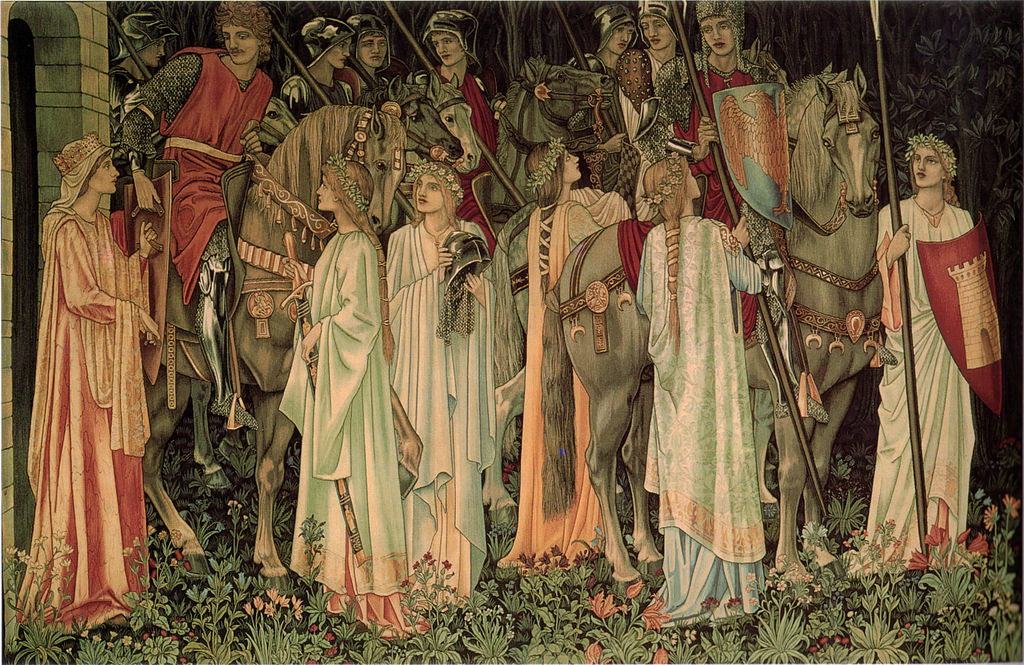
 In the Middle Ages, fairie was used adjectivally, meaning “enchanted” (as in fairie knight, fairie queene), but also became a generic term for various “enchanted” creatures during the Late Middle English period. Literature of the Elizabethan era conflated elves with the fairies of Romance culture, rendering these terms somewhat interchangeable. The modern concept of “fairy” in the narrower sense is unique to English folklore, later made diminutive in accordance with prevailing tastes of the Victorian era, as in “fairy tales” for children.
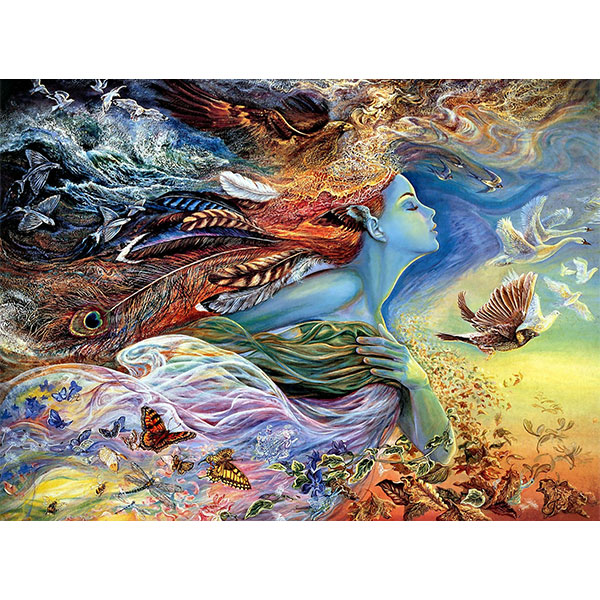
Fairies are generally described as human in appearance and having magical powers. Diminutive fairies of various kinds have been reported through centuries, ranging from quite  tiny to the size of a human. These small sizes could be magically assumed, rather than constant. Some depictions of fairies show them with footwear, others as barefoot. Wings, while common in Victorian and later artworks, are rare in folklore; fairies flew by means of magic, sometimes perched on ragwort stems or the backs of birds. Modern illustrations often include dragonfly or butterfly wings.

In England’s Theosophist circles of the 19th century, a belief in the “angelic” nature of fairies was reported. Entities referred to as Devas were said to guide many processes of nature, such as evolution of organisms, growth of plants, etc., many of which resided inside the Sun (Solar Angels). The more Earthbound Devas included nature spirits, elementals, and fairies, which were described as appearing in the form of colored flames, roughly the size of a human.
Arthur Conan Doyle, in his 1922 book The Coming of the Fairies; The Theosophic View of Fairies,  reported that eminent theosophist E. L. Gardner had likened fairies to butterflies, whose function was to provide an essential link between the energy of the sun and the plants of Earth, describing them as having no clean-cut shape … small, hazy, and somewhat luminous clouds of colour with a brighter sparkish nucleus. “That growth of a plant which we regard as the customary and inevitable result of associating the three factors of sun, seed, and soil would never take place if the fairy builders were absent.”

There is an outdated theory that fairy folklore
evolved from folk memories of a prehistoric race:
newcomers superseded a body of earlier human or
humanoid peoples, and the memories of this
defeated race developed into modern conceptions
of fairies. Proponents find support in the tradition
of cold iron as a charm against fairies, viewed as
cultural memory of invaders with iron weapons
displacing peoples who had just stone, bone, wood,
etc., at their disposal, and were easily defeated.
19th-century archaeologists uncovered underground rooms in the Orkney islands that resembled the Elfland described in Childe Rowland, which lent additional support. In folklore, flint arrowheads from the Stone Age were attributed to the fairies as “elfshot“, while their green clothing and underground homes spoke to a need for camouflage and covert shelter from hostile humans, their magic a necessary skill for combating those with superior weaponry. In a Victorian tenet of evolution, mythic cannibalism among ogres was attributed to memories of more savage races, practising alongside “superior” races of more refined sensibilities. The most important modern proponent of the ‘hidden people’ theory was the Scottish folklorist and antiquarian David MacRitchie.
Elementals

https://www.wmoda.com/wp-content/uploads/2021/06/Spirit-of-Flight-J-Wall.jpg
A theory that fairies, et al., were intelligent species, distinct from humans and angels. An alchemist, Paracelsus, classed gnomes and sylphs as elementals, meaning magical entities who personify a particular force of nature, and exert powers over these forces. Folklore accounts have described fairies as “spirits of the air”.
“Irish fairies, also known as the Aos Sí, are a supernatural race that are deeply rooted in Irish folklore and mythology. According to pagan tradition, the Aos Sí are said to be descendants of the Tuatha Dé Danann, which translates to “People of Danu” in Gaelic. The ancient Celts believed that the Tuatha Dé Danann were a mythical deity with god-like powers and magic who arrived in Ireland before humans. They were able to perform incredible acts of strength, cunning, and craft. https://www.shanore.com/blog/irish-fairies/#
The fairy realm, also known as the Otherworld, is a mystical dimension believed to exist alongside our own. Whispered tales speak of an ethereal land brimming with breathtaking beauty, where various magical creatures, including fairies, inhabit in enchanting splendor.
In Irish folklore, certain places called “fairy trees” or “fairy forts” hold the entrance to the magical world of fairies. People believe these mystical places, often marked by ancient trees or circular earthen mounds, bring about bad luck. However, it can also provoke the wrath of the fairies when interfered with or disrespected.”
Types of Irish Fairies
- Banshee: The Banshee is a famous figure in Irish folklore associated with impending death. People believe she is a fairy woman who wails and laments, foretelling the demise of a family member. People often describe her as a pale-skinned woman with red hair and wearing a beautiful white gown. Furthermore, those who hear her eerie cries consider it a warning.
- Leprechaun: Perhaps the most well-known of all Irish fairies, the Leprechaun is a mischievous little creature. They are also famous for their love of gold and their shoemaking skills. People often depict leprechauns as small old-men with beards who wear green clothes and a hat. Legends say that if you catch a Leprechaun, it must grant you three wishes in exchange for its freedom.
- Pooka: The Pooka is a shape-shifting fairy known for its mischief. It can transform into various animals, often appears as a black horse with fiery eyes. The Pooka plays pranks on humans, but it also helps by guiding lost travelers or protecting animals.
- Dullahan: The Dullahan is a terrifying fairy associated with death and darkness. This headless horseman rides through the night, carrying its own severed head as a lantern. People believe that to encounter the Dullahan is a sign of imminent death.
- Changelings: Changelings are fairies that replace human infants with their own kind of fairy. Sometimes, these naughty creatures resemble unhealthy or disfigured kids, causing people to think fairies took their own children. People believe that changelings have special powers and can identify them by their unusual behavior or physical traits.
- Dwarf creatures: Often depicted with green hair and clothes, these fairies live underground or in stone heaps and use their magic for good.
- Winged sprites: These fairies are often depicted as beautiful, ageless women dressed in white who live in fairyland and intervene in human affairs.
- Tiny, protective creatures: These fairies are often associated with household hearths.
https://www.britannica.com/art/fairy
Fairies are also said to have many different characteristics, including:- Shapeshifters: Fairies can change their size, sometimes magically, and some can even expand to look like humans.
- Illusion creators: Fairies are said to be secretive and sly, and can create illusions.
- Passionate and vengeful: Fairies can also be cunning and have a bad temper.
Fairies are usually conceived as being characteristically beautiful or handsome and as having lives corresponding to those of human beings, though longer. They have no souls and at death simply perish. “
Between 1690 and 1709, the conteuses were the driving force behind the first French fairy-tale vogue. They produced two-thirds of a corpus of tales that inaugurated many of the conventional features of the modern fairy-tale genre, but their legacy has been overshadowed by better-known figure of Charles Perrault.
https://historiesofemotion.com/2021/06/10/love-power-and-gender-in-seventeenth-century-french-fairy-tales/#
“The Lakota Sioux, like other tribal nations, had many versions of a creation story but all involved Wakan Tanka (Great Mystery or Great Spirit), the supreme creative power in the universe, who made all things and so caused all to be related as a family, whether human, animal, plant, spirit, or element; one’s ‘relatives’ were all living things. Since everything had been born from the same source, all things were imbued with the same sacred spirit, including what one might call inanimate objects such as stones, trees, mountains, and earth. Human beings were only one part of the great, intricate, web of creation; neither superior nor inferior to any other, whether a bear or elk or an ant or rock.
https://www.worldhistory.org/article/2279/lakota-sioux-creation-story/ Wakan Tanka sent his spirit to inhabit a place within Han, and this became Inyan (Rock) and so rock existed within endless darkness. Wakan Tanka wanted to expand his creation and so made Maka (Earth) from his blood and then Skan (sky). There were now four primordial gods – Han, Inyan, Maka, and Skan – all aspects of Wakan Tanka but able to operate independently for their own purposes. “
“We are guided by the “seven directions” of practice: Integration & Holistic Wellness, Culture & Identity, Families & Communities, Respect for Sovereignty, Service, Indigenous Knowledge, and Tribal Governance.” https://www.indigenousphi.org/# There are seven highly regarded values to the Lakota, which include generosity, kinship, fortitude, wisdom, prayer, respect and compassion.
https://www.stjo.org/native-american-culture/native-american-beliefs/# The ancestral Sioux most likely lived in the Central Mississippi Valley region and later in Minnesota for at least two or three thousand years. The ancestors of the Sioux arrived in the northwoods of central Minnesota and northwestern Wisconsin from the Central Mississippi River shortly before 800 AD.
So much of the human condition remains shrouded in mystery. People rely on five senses to interpret the universe. With a vast array of newfangled interconnected technology, we can see great distances and hear sounds earlier generations could never have imagined. We are constantly hearing, seeing, smelling, tasting and touching evidence which surround…
https://thepeaceresource.com/tag/existentialism/ Mystery, Imagination, and Wisdom…
“The true mystery of the world is the visible, not the invisible.” ~Oscar Wilde
“The simple step of a courageous individual is not to take part in the lie. One word of truth outweighs the world.”
― Aleksandr Solzhenitsyn
Please Donate: Keep these Resources Online!
Thanks for supporting Alternative Media and Education
https://en.wikipedia.org/wiki/Magic_(supernatural)
Contact Tim with questions
Please support Alternative Media and Education
http://www.RevolutionResource.org
http://www.ThePeaceresource.com
and other real news resources…
Together we make a difference.
Thanks for all you do. Join the Revolution!
Please Donate for Literacy and to keep this resource.